

Six Goals with African Roots: How the European Far-Right Celebrates Victories Made by Migrants' Children
The encounter between the Netherlands and Sweden in the second round of Group F at the 2026 World Cup was not just a match that ended with a sweeping 5-1 victory for the Dutch. It turned into a remarkable scene with dimensions that go beyond football. In a match hosted in Houston, USA, all six goals were scored by players of African descent, presenting a paradox that raises questions about the anti-immigration rhetoric adopted by far-right parties in Europe.
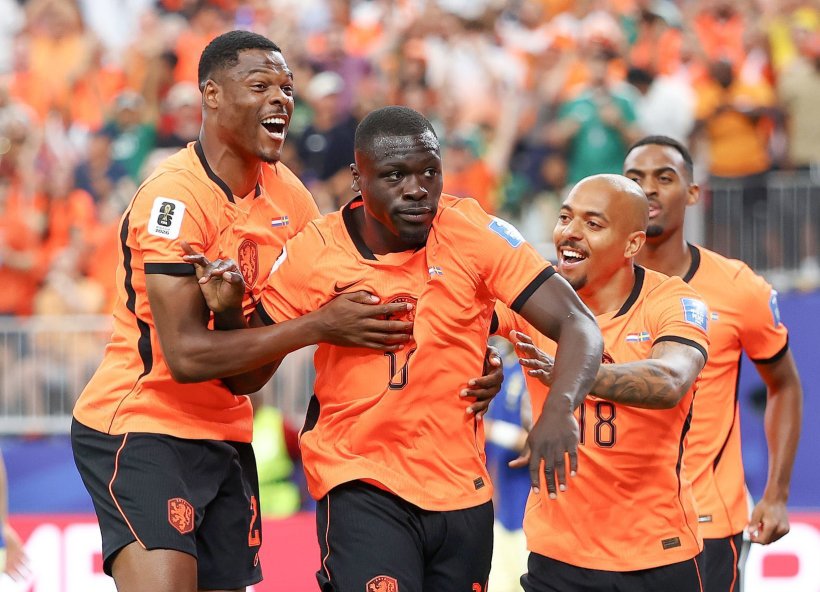
The Dutch national team entered the match under the pressure of a draw against Japan, but settled matters early through Brian Brobbey, the striker of Ghanaian descent, who opened the scoring in the fifth minute before adding the second goal in the 17th minute. In the second half, Cody Gakpo, of Togolese roots, continued his brilliance by scoring two goals in the 47th and 54th minutes, while Anthony Elanga, born in Sweden to Cameroonian parents, reduced the deficit in the 59th minute. Crysencio Summerville, of Surinamese African descent, completed the Dutch quintet with a fifth goal in the 89th minute.
The most prominent paradox is that all six top scorers come from immigrant backgrounds and African origins, which has reignited the old debate about identity and belonging in Europe. While some far-right movements continue to attack immigrants and question their role within European societies, football presents a completely different picture, where the children of these communities become national symbols and heroes celebrated by fans with every victory. This phenomenon is particularly evident in teams like the Netherlands, France, England, and Sweden, which have come to rely heavily on talents shaped within multicultural societies.
While Ronald Koeman praised his players' reaction after the draw with Japan, and Graham Potter admitted that Sweden received a harsh lesson, the most prominent image of the match remained the fact that all six goals were scored by players of African descent. This scene raises a question that is ever-present in contemporary European discourse: How can narratives of rejection and exclusion coexist with the celebration of victories crafted by the children of immigrants themselves?
The Dutch national team entered the match under the pressure of a draw against Japan, but settled matters early through Brian Brobbey, the striker of Ghanaian descent, who opened the scoring in the fifth minute before adding the second goal in the 17th minute. In the second half, Cody Gakpo, of Togolese roots, continued his brilliance by scoring two goals in the 47th and 54th minutes, while Anthony Elanga, born in Sweden to Cameroonian parents, reduced the deficit in the 59th minute. Crysencio Summerville, of Surinamese African descent, completed the Dutch quintet with a fifth goal in the 89th minute.
The most prominent paradox is that all six top scorers come from immigrant backgrounds and African origins, which has reignited the old debate about identity and belonging in Europe. While some far-right movements continue to attack immigrants and question their role within European societies, football presents a completely different picture, where the children of these communities become national symbols and heroes celebrated by fans with every victory. This phenomenon is particularly evident in teams like the Netherlands, France, England, and Sweden, which have come to rely heavily on talents shaped within multicultural societies.
While Ronald Koeman praised his players' reaction after the draw with Japan, and Graham Potter admitted that Sweden received a harsh lesson, the most prominent image of the match remained the fact that all six goals were scored by players of African descent. This scene raises a question that is ever-present in contemporary European discourse: How can narratives of rejection and exclusion coexist with the celebration of victories crafted by the children of immigrants themselves?
View Comments