

Ecuador in the World Cup: A Golden Generation Seeks a New Historic Step
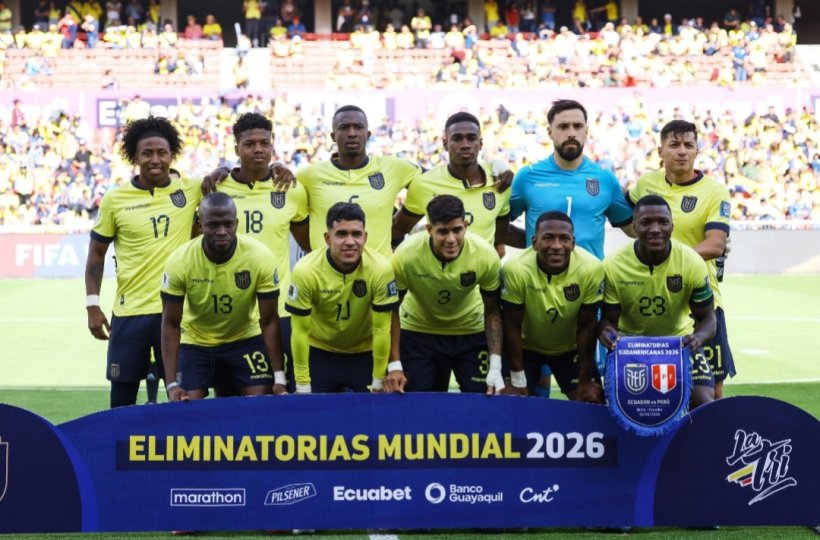
The Ecuador national team enters the 2026 World Cup as one of the most stable and organized teams in South America, having successfully established itself among the continent's top teams during the World Cup qualifiers. The team secured second place behind Argentina despite the penalty related to the Byron Castillo case, relying on a strong defensive system and a long series of positive results.
The team is led by Argentine coach Sebastián Beccacece, who is influenced by his compatriots Jorge Sampaoli and Marcelo Bielsa. He relies on intense pressing, high-tempo play, and quick transitions between defense and attack. He employs more than one tactical formation, most notably 4-2-3-1 and 4-4-2, relying on a double pivot to provide the team with balance, a playmaker behind the forwards, and fast wingers capable of exploiting spaces.
The defensive line is considered one of the main strengths of the Ecuadorian national team, as it includes a group of defenders playing at the highest European levels, led by William Pacho, Piero Hincapié, Pervis Estupiñán, and Joel Ordóñez. This quartet has succeeded in providing the team with significant defensive solidity, making Ecuador one of the least conceding teams in the continent during the qualifiers.
In the midfield, Moises Caicedo serves as the team's main engine, thanks to his ability to recover the ball, lead transitions, and create play from deep. Up front, veteran captain and forward Enner Valencia continues to play an influential role in finishing attacks, while Gonzalo Plata provides speed and skill on the flanks.
Despite the team's exit from the quarter-finals of the 2024 Copa America against Argentina, who later won the title, the overall performance during the qualifiers demonstrated collective maturity and a clear development in competitive character. The team is notable for not relying on a single player, but rather having a young and balanced group capable of distributing responsibilities on the field.
However, offensive effectiveness remains one of the main challenges for the team, as they scored only 14 goals in 18 qualifying matches, compared to five goals conceded, reflecting significant defensive superiority against limited offensive output.
Becacece has emphasized on multiple occasions that his goal was to maintain the defensive solidity that has characterized the team in recent years, while giving players more freedom to showcase their individual abilities. Despite sometimes facing criticism for his tactical conservatism, he is widely appreciated for the results he has achieved and for rebuilding the relationship between the team and the fans.
Many believe that Ecuador, which is in a group with Germany, Ivory Coast, and Curacao, could be one of the teams capable of playing the role of the dark horse in the tournament, especially with its young and physically strong players, and a clear ambition to surpass the group stage and qualify for the knockout rounds, as it did in the 2006 edition in Germany.
The team is led by Argentine coach Sebastián Beccacece, who is influenced by his compatriots Jorge Sampaoli and Marcelo Bielsa. He relies on intense pressing, high-tempo play, and quick transitions between defense and attack. He employs more than one tactical formation, most notably 4-2-3-1 and 4-4-2, relying on a double pivot to provide the team with balance, a playmaker behind the forwards, and fast wingers capable of exploiting spaces.
The defensive line is considered one of the main strengths of the Ecuadorian national team, as it includes a group of defenders playing at the highest European levels, led by William Pacho, Piero Hincapié, Pervis Estupiñán, and Joel Ordóñez. This quartet has succeeded in providing the team with significant defensive solidity, making Ecuador one of the least conceding teams in the continent during the qualifiers.
In the midfield, Moises Caicedo serves as the team's main engine, thanks to his ability to recover the ball, lead transitions, and create play from deep. Up front, veteran captain and forward Enner Valencia continues to play an influential role in finishing attacks, while Gonzalo Plata provides speed and skill on the flanks.
Despite the team's exit from the quarter-finals of the 2024 Copa America against Argentina, who later won the title, the overall performance during the qualifiers demonstrated collective maturity and a clear development in competitive character. The team is notable for not relying on a single player, but rather having a young and balanced group capable of distributing responsibilities on the field.
However, offensive effectiveness remains one of the main challenges for the team, as they scored only 14 goals in 18 qualifying matches, compared to five goals conceded, reflecting significant defensive superiority against limited offensive output.
Becacece has emphasized on multiple occasions that his goal was to maintain the defensive solidity that has characterized the team in recent years, while giving players more freedom to showcase their individual abilities. Despite sometimes facing criticism for his tactical conservatism, he is widely appreciated for the results he has achieved and for rebuilding the relationship between the team and the fans.
Many believe that Ecuador, which is in a group with Germany, Ivory Coast, and Curacao, could be one of the teams capable of playing the role of the dark horse in the tournament, especially with its young and physically strong players, and a clear ambition to surpass the group stage and qualify for the knockout rounds, as it did in the 2006 edition in Germany.
News Related

Top Goal Scorers in World Cup Knockout Stages
Highlighting the top goal scorers in the knockout stages of World Cup history.

The Continents with the Most Victories in World Cup History
A recent statistical reading issued by the International Federation of Association Football
The Strongest and Weakest Groups in the 2026 World Cup
The groups of the 2026 World Cup vary in strength according to Opta rankings.

Argentina Surpasses All in Number of World Cup Coaches
World Cup 2026: Diversity of Foreign Coaches Led by Argentinians.

Rare Family Phenomenon in the 2026 World Cup
Siblings participating with different national teams in the 2026 World Cup.

FIFA Reverses Decision Before World Cup Kick-off
The International Federation of Association Football (FIFA) has reversed its previous decision.

Lennart Kart Excluded from German National Team Camp, Replacement Revealed
Karl's injury, Ouedraogo called up, changes before the World Cup.
France Falls to Ivory Coast in First Test Before the World Cup
France loses a friendly match against Ivory Coast 2-1 before the World Cup.
Teams with the Most Goals in a Single World Cup Edition
Data released by the International Federation of Association Football shows a list of teams
How Did Host Countries Perform in the World Cup?
Coinciding with the upcoming 2026 World Cup edition