


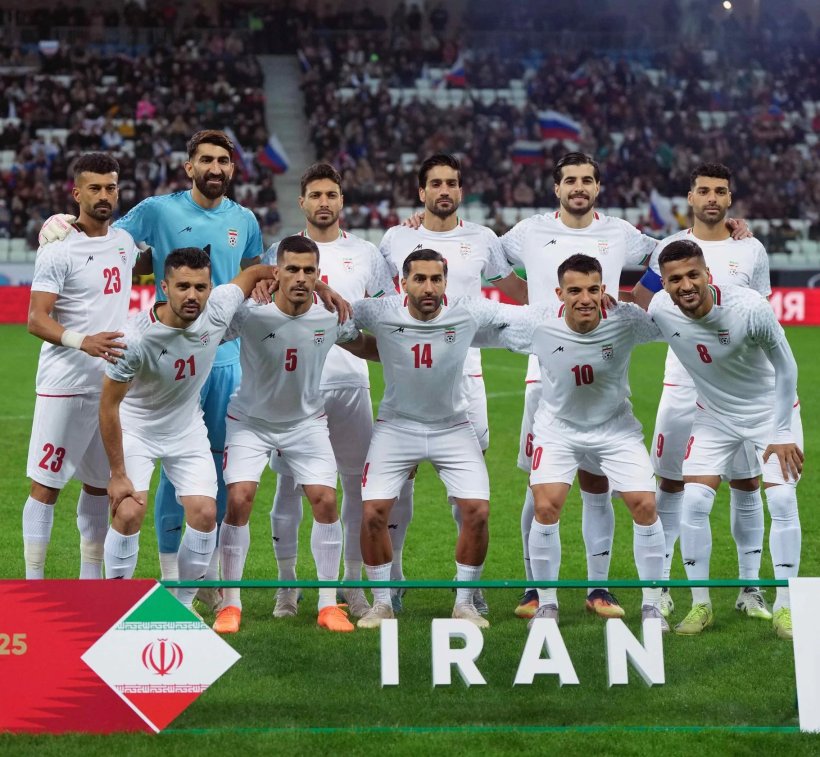
Iran in the World Cup: Great Ambitions Amid Complex Political Atmosphere
The Iranian national team enters the 2026 World Cup finals after being one of the first teams to secure qualification, but the preparation for the tournament has not been easy at all. Political tensions with the United States and the occupying entity have cast a shadow over the team's participation, especially since all their group stage matches will be held on American soil. Nevertheless, coach Amir Ghalenoei succeeded in keeping his players focused by moving the main training camp from the United States to Mexico a few weeks before the tournament began.
During the friendly matches against Nigeria and Costa Rica in March, Queiroz demonstrated notable tactical flexibility. He first played with a 3-6-1 formation, which he described as the "alternative defensive plan," believed to be intended for facing Belgium. Then he adopted a 4-4-2 formation against Costa Rica, while the 4-2-3-1 system remains the primary lineup the team relied on during the qualifiers.
There are names almost guaranteed in the starting lineup regardless of the tactical formation, most notably goalkeeper Alireza Beiranvand, who is preparing to play in his third consecutive World Cup, defender Shoja Khalilzadeh, midfielder Saeid Ezatolahi if he is physically fit, in addition to the captain and forward Mehdi Taremi.
Amir Ghalenoei is considered one of the most successful coaches in the history of Iranian football. As a former midfielder for Esteghlal Tehran, he was known for his sharp personality, a trait that also accompanied him in his coaching career. This is his second stint with the national team, having previously led the team after the 2006 World Cup before being dismissed following the exit from the 2007 Asian Cup. The 2026 World Cup is seen as a perfect opportunity for him to respond to his old critics.
The Iranian national team heavily relies on the experience of Mehdi Taremi, who has played for several prominent European clubs, including Porto and Inter Milan. The Iranian forward is known for his ability to move behind defensive lines and exploit spaces, while also performing important defensive roles. He is seen as the player capable of leading Iran to a historic achievement if he performs at his best.
On the other hand, the exclusion of striker Sardar Azmoun sparked widespread controversy within Iran, as he became a divisive figure following the circulation of photos showing him with the ruler of the UAE in recent times.
The swift winger Mehdi Ghaedi is one of the most prominent names expected to steal the spotlight. Although his career has not yet lived up to the high expectations that surrounded him at the start, he possesses exceptional individual skills, great speed, and the ability to dribble and score. He made a strong return to the national team after scoring a fantastic goal in the friendly match against Costa Rica.
Saman Ghoddos is highly respected within the national team, even though he doesn't receive the same media attention as some of his teammates. Born in the city of Malmö, Sweden, he is known for his ability to play in multiple positions on the field and is recognized for his professionalism and calm demeanor, making him one of the key figures in the team's locker room.
For the second consecutive time in the World Cup, the Iranian national team enters the tournament amid a clear division among the fans. Some support "Team Melli" under all circumstances, while opponents of the Iranian government believe that the team represents the state more than the people.
Given the difficulty Iranians face in obtaining travel visas to the United States, it is expected that Iranians residing in America will make up the largest proportion of fans in the stands. This could lead to mixed atmospheres during the matches, whether through cheering or even celebrating the opponents' goals in some cases.
Despite all the political and logistical challenges that surrounded the team in recent months, Amir Ghalenoei believes that his national team is capable of creating a major surprise, asserting that his players "sacrificed a lot and worked hard throughout the qualifiers," and that they have the technical capabilities to make the 2026 World Cup an unforgettable tournament for Iran.
During the friendly matches against Nigeria and Costa Rica in March, Queiroz demonstrated notable tactical flexibility. He first played with a 3-6-1 formation, which he described as the "alternative defensive plan," believed to be intended for facing Belgium. Then he adopted a 4-4-2 formation against Costa Rica, while the 4-2-3-1 system remains the primary lineup the team relied on during the qualifiers.
There are names almost guaranteed in the starting lineup regardless of the tactical formation, most notably goalkeeper Alireza Beiranvand, who is preparing to play in his third consecutive World Cup, defender Shoja Khalilzadeh, midfielder Saeid Ezatolahi if he is physically fit, in addition to the captain and forward Mehdi Taremi.
Amir Ghalenoei is considered one of the most successful coaches in the history of Iranian football. As a former midfielder for Esteghlal Tehran, he was known for his sharp personality, a trait that also accompanied him in his coaching career. This is his second stint with the national team, having previously led the team after the 2006 World Cup before being dismissed following the exit from the 2007 Asian Cup. The 2026 World Cup is seen as a perfect opportunity for him to respond to his old critics.
The Iranian national team heavily relies on the experience of Mehdi Taremi, who has played for several prominent European clubs, including Porto and Inter Milan. The Iranian forward is known for his ability to move behind defensive lines and exploit spaces, while also performing important defensive roles. He is seen as the player capable of leading Iran to a historic achievement if he performs at his best.
On the other hand, the exclusion of striker Sardar Azmoun sparked widespread controversy within Iran, as he became a divisive figure following the circulation of photos showing him with the ruler of the UAE in recent times.
The swift winger Mehdi Ghaedi is one of the most prominent names expected to steal the spotlight. Although his career has not yet lived up to the high expectations that surrounded him at the start, he possesses exceptional individual skills, great speed, and the ability to dribble and score. He made a strong return to the national team after scoring a fantastic goal in the friendly match against Costa Rica.
Saman Ghoddos is highly respected within the national team, even though he doesn't receive the same media attention as some of his teammates. Born in the city of Malmö, Sweden, he is known for his ability to play in multiple positions on the field and is recognized for his professionalism and calm demeanor, making him one of the key figures in the team's locker room.
For the second consecutive time in the World Cup, the Iranian national team enters the tournament amid a clear division among the fans. Some support "Team Melli" under all circumstances, while opponents of the Iranian government believe that the team represents the state more than the people.
Given the difficulty Iranians face in obtaining travel visas to the United States, it is expected that Iranians residing in America will make up the largest proportion of fans in the stands. This could lead to mixed atmospheres during the matches, whether through cheering or even celebrating the opponents' goals in some cases.
Despite all the political and logistical challenges that surrounded the team in recent months, Amir Ghalenoei believes that his national team is capable of creating a major surprise, asserting that his players "sacrificed a lot and worked hard throughout the qualifiers," and that they have the technical capabilities to make the 2026 World Cup an unforgettable tournament for Iran.
News Related

Body Found Inside Car Near Iran National Team Training Stadium
A body was found inside the trunk of a parked car near the stadium

World Cup Visas Spark Controversy, Senegal Fans Follow Ivory Coast and Iran
Visa crisis hinders Senegalese fans' attendance at the 2026 World Cup.

Burklemans: I Expect the Egypt-Belgium Match to End in a Draw
The Belgium vs Egypt match is strong, prediction: 1-1 draw.
Mohamed Barakat Talks About Egypt vs Belgium in the World Cup
Barakat: Egypt Needs Defensive Security Against Belgium in the World Cup.
History of Matches Between Egypt and Belgium Before the World Cup Encounter
Egypt faces Belgium in the 2026 World Cup in Group G.
Egypt National Team's Training Schedule Today in Preparation for Facing Belgium
The Egypt national team is set to face Belgium in the 2026 World Cup.
Egypt National Team Retains 29th Place in FIFA Ranking Before World Cup
The Egypt national team ranks 29th globally and fifth in Africa.

Courtois: Egypt is our strongest opponent.. We must be cautious of their counterattacks
Courtois: Egypt is a strong opponent, we are focusing on the first match.
Vitoria: Mohamed Salah Possesses Great Discipline and High Professional Mentality
Vitoria praises Salah and considers the 2026 World Cup a pivotal milestone.

Hossam Hassan Prepares the Pharaohs for Belgium Clash with Intensive Sessions
Egypt's National Team Prepares to Face Belgium in the World Cup.