


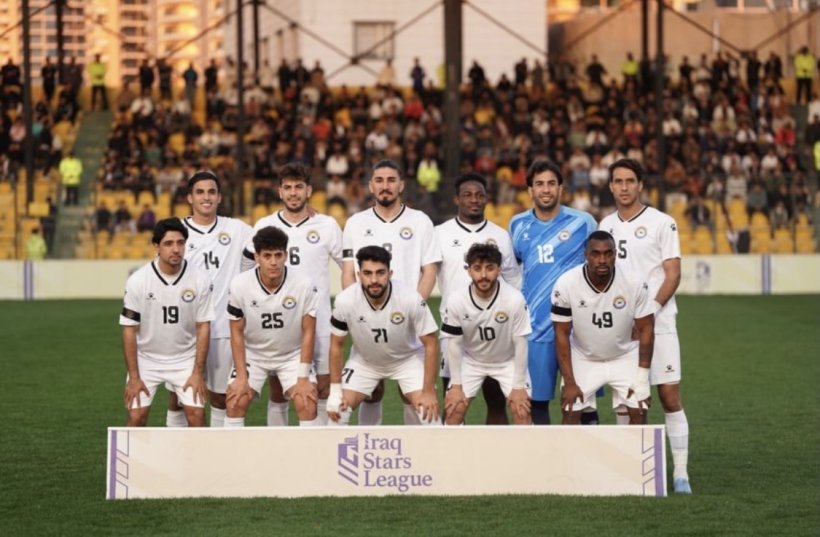
What are the Causes of Al-Zawraa Club's Problems!
Al-Zawraa Club is currently experiencing a difficult period on all fronts, whether in terms of results or technical performance, following a series of disappointments that began with its exit from the AFC Champions League against the UAE's Al-Wasl in the Round of 16. This continued with the defeat against Al-Karkh, followed by a derby loss to Al-Shorta at home in front of its fans, leaving the club in eighth place in the Iraqi Stars League with 31 points, and a postponed match against Amanat Baghdad.
One of the main issues facing Al-Zawraa revolves around the instability of the team's technical management. After coach Haidar Obaid led the team last season, achieving remarkable results, competing for the league title, and securing victories against Al-Shorta and Al-Quwa Al-Jawiya both home and away, the management suddenly decided to terminate his contract and hire coach Abdul Ghani Shahad.
However, Shahad's tenure did not yield the desired results, as he failed to lead the team effectively, eventually leading to his departure from the club. Subsequently, the management turned to Egyptian coach Emad El-Nahas, who started off positively but failed to maintain the team's stability, resulting in his replacement with coach Luay Salah until the end of the current season.
Al-Zawraa's problems were not limited to technical stability but also extended to the sports side and players. Last season, the team lost key players like midfielder Ali Mohsen, who moved to Al-Karma, and Tunisian left-winger Aziz Al-Shitawi, who were essential pillars of the team and delivered outstanding performances, but left at the end of the season.
In the first half of the current season, Al-Zawraa continued to lose important elements, with the departure of Jordanian midfield dynamo Nizar Al-Rashdan to Qatar SC, in addition to young talent Haider Abdul Karim, who moved to Al-Nassr Saudi Club, creating a significant gap in the team's lineup and negatively affecting the collective performance.
With the start of the second phase of the league, Al-Zawraa's management failed to compensate for the significant losses suffered by the team, as they did not sign players capable of enhancing the team's technical level or filling the gaps in the three lines. This increased the difficulty of the task for current coach Luay Salah, who had to deal with a team lacking enough elements to face strong teams in the league, as clearly reflected in the recent series of negative results.
One of the main issues facing Al-Zawraa revolves around the instability of the team's technical management. After coach Haidar Obaid led the team last season, achieving remarkable results, competing for the league title, and securing victories against Al-Shorta and Al-Quwa Al-Jawiya both home and away, the management suddenly decided to terminate his contract and hire coach Abdul Ghani Shahad.
However, Shahad's tenure did not yield the desired results, as he failed to lead the team effectively, eventually leading to his departure from the club. Subsequently, the management turned to Egyptian coach Emad El-Nahas, who started off positively but failed to maintain the team's stability, resulting in his replacement with coach Luay Salah until the end of the current season.
Al-Zawraa's problems were not limited to technical stability but also extended to the sports side and players. Last season, the team lost key players like midfielder Ali Mohsen, who moved to Al-Karma, and Tunisian left-winger Aziz Al-Shitawi, who were essential pillars of the team and delivered outstanding performances, but left at the end of the season.
In the first half of the current season, Al-Zawraa continued to lose important elements, with the departure of Jordanian midfield dynamo Nizar Al-Rashdan to Qatar SC, in addition to young talent Haider Abdul Karim, who moved to Al-Nassr Saudi Club, creating a significant gap in the team's lineup and negatively affecting the collective performance.
With the start of the second phase of the league, Al-Zawraa's management failed to compensate for the significant losses suffered by the team, as they did not sign players capable of enhancing the team's technical level or filling the gaps in the three lines. This increased the difficulty of the task for current coach Luay Salah, who had to deal with a team lacking enough elements to face strong teams in the league, as clearly reflected in the recent series of negative results.
News Related

Discover the Map of Clubs Representing Iraq Internationally for the Next Season
After the conclusion of the Iraq Stars League for the 2025/2026 season and the coronation of Al-Quwa Al-Jawiya

Ibrahim Tomiwa Officially Bids Farewell to Al-Zawraa
The Nigerian striker Ibrahim Tomiwa announced his departure from Al-Zawraa Club.

Al-Zawraa Falls to Najaf with a Clean Goal in League Finale
Al-Zawraa Club concluded the 2025/2026 Iraqi Stars League journey with an unexpected loss.

Police and Al-Zawraa Compete to Sign Erbil Striker
The Police Club has strongly entered the summer transfer market and has begun preparing

Hossam Fawzi: We Need a Winning Mentality Against Najaf and We Apologize to Our Fans
Al-Zawraa Club held its press conference for the upcoming match against Najaf at the conclusion
The Date of Al-Zawraa's Next Match in the League
The curtain will fall tomorrow, Monday, on the 2025/2026 Iraqi Stars League season.

Iraq Stars League Clubs Achieve Unprecedented Feat
Iraq Stars League clubs have succeeded in setting a new record.
Amer Jamous Announces the End of His Journey with Al-Zawraa
Jordanian midfielder Amer Jamous officially announced the end of his journey with

Oil Achieves Valuable Victory Over Al-Zawraa in the Stars League
The Oil Club achieved a valuable victory over its host Al-Zawraa with a goal without

Hossam Fawzi: We Are Now Rebuilding Trust and Our Goal is to Win Against Al-Naft
Al-Zawraa's match against Al-Naft in the 37th round of the league