

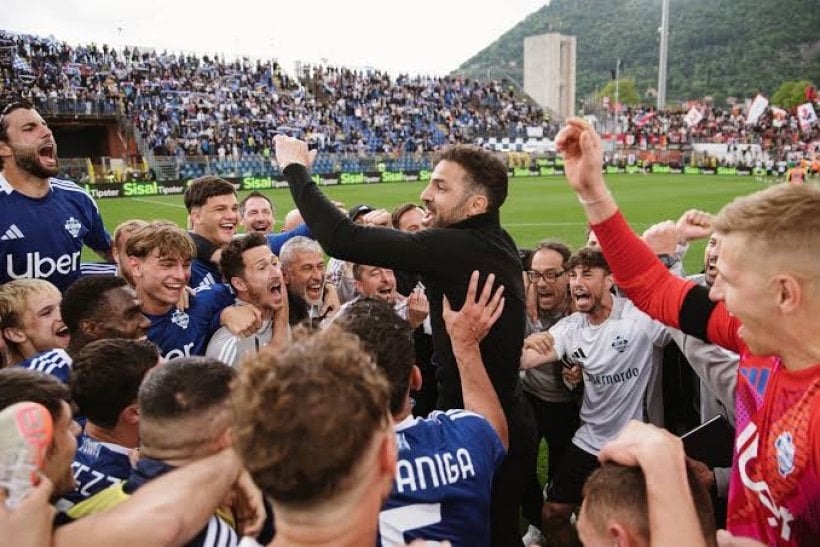
Como: from an obscure club to a rising force competing with the giants of Italy thanks to ambitious investments and innovative ideas
Como have transformed from a little-known team in the fourth division to one of the rising projects in Italian football over the past few years. They successfully returned to Serie A in 2024, before finishing fourth last season and securing their place in the UEFA Champions League.
The significant turnaround in the club's fortunes is attributed to the acquisition by the Hartono family in 2019, when it was competing in the fourth division. The family injected important investments into the project, focusing on discovering young talents and building a team capable of competing with the top clubs.
Cesc Fàbregas has become one of the key figures in the project after joining the club as a player in 2022, before quickly transitioning into coaching while also holding a minority stake in the club. Frenchman Thierry Henry is also involved in the project, while Raphaël Varane serves on the board.
Como's ambitions are not limited to sporting results; they extend to leveraging the city's fame and its world-renowned lake to build a brand associated with the club, through luxury clothing and linking football with local culture and tourism, in an attempt to transform the team into a comprehensive sports and commercial project.
On the transfer front, the club has adopted a policy focused on discovering talents and strategic signings, having signed Frenchman Lucas Da Cunha from Nice for less than one million euros in 2023, before he became the team captain. The squad also includes his compatriots Jean Butez and Maxence Caqueret.
In contrast, some significant transfers have seen large expenditures, most notably the retention of Argentine Nico Paz for €66 million, along with the signing of defender Trevoh Chalobah for €30 million, according to the report.
Despite praise for Cesc Fàbregas' attacking style and the ambitious project, questions remain in Italy about the club's ability to stay among the elite in the long term, given its limited commercial resources compared to historic clubs and its reliance on support from its owner.
The club is working on developing its stadium, Giuseppe Sinigaglia, which currently has a capacity of around 12,000 spectators, with plans for redevelopment by 2028 to increase its capacity to 15,000, in line with its growing ambitions.


View Comments