


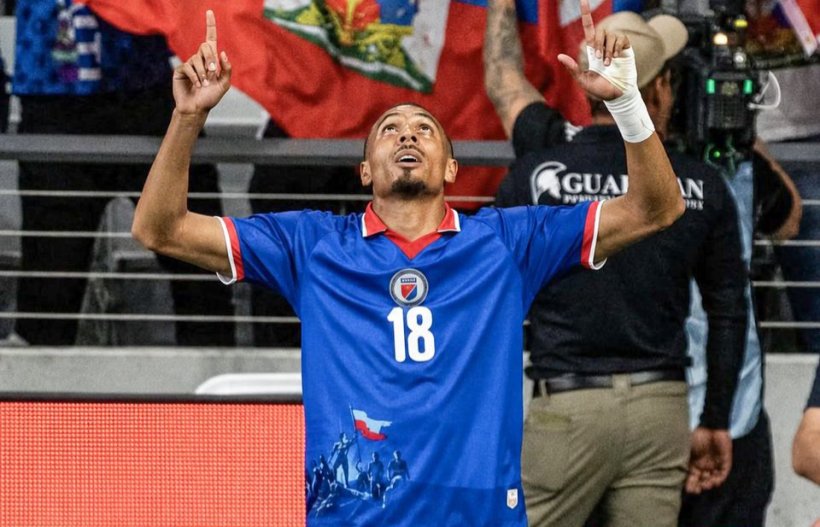
Haiti's Shirt Sparks Controversy: FIFA Bans Independence Symbol and Faces Accusations of Double Standards
The decisions of the International Federation of Association Football (FIFA) sparked a wave of criticism after forcing "Saeta," the manufacturer of the Haiti national team's jersey, to modify the official design because it featured an image of the Battle of Vertières. This historic battle marked the end of the Haitian Revolution and paved the way for the country's declaration of independence in 1804 as the world's first black republic.
FIFA justified its decision by stating that the design carried a "political message," necessitating its removal according to its regulations on political neutrality in international competitions. However, many viewed the decision as ignoring the historical and cultural significance of the symbol, which is considered a source of national pride for Haitians rather than a contemporary political stance.
In contrast, FIFA faced accusations of double standards after allowing the continuation of measures that prevented an officially accredited Somali referee and an Iraqi photographer from entering the United States to participate in covering and managing the 2026 World Cup matches, for reasons described as political in nature.
Critics argue that the contrast between the strictness in banning a historical symbol on a national team's jersey and the lack of a firm stance against preventing accredited individuals from performing their official duties raises new questions about FIFA's consistency in applying the principles of neutrality and equality that it continuously emphasizes.
FIFA justified its decision by stating that the design carried a "political message," necessitating its removal according to its regulations on political neutrality in international competitions. However, many viewed the decision as ignoring the historical and cultural significance of the symbol, which is considered a source of national pride for Haitians rather than a contemporary political stance.
In contrast, FIFA faced accusations of double standards after allowing the continuation of measures that prevented an officially accredited Somali referee and an Iraqi photographer from entering the United States to participate in covering and managing the 2026 World Cup matches, for reasons described as political in nature.
Critics argue that the contrast between the strictness in banning a historical symbol on a national team's jersey and the lack of a firm stance against preventing accredited individuals from performing their official duties raises new questions about FIFA's consistency in applying the principles of neutrality and equality that it continuously emphasizes.
News Related

FIFA Requests Haiti to Modify Its Jersey
FIFA requests Haiti to modify its jersey for the 2026 World Cup.
The Strongest and Weakest Groups in the 2026 World Cup
The groups of the 2026 World Cup vary in strength according to Opta rankings.

Haiti Before the World Cup: A Surprising Force on the Field and Enthusiastic Crowds in the Stands
Haiti defeats New Zealand 4-0 and shows improvement before the World Cup.
Morocco Challenges Brazil and Chases the Lead.. What Awaits the Atlas Lions in the World Cup
Morocco aims to qualify for the 2026 World Cup by facing Brazil.

Scotland Announces Final Squad for the World Cup
Scotland announces its squad for the 2026 World Cup.

Record Increases in 2026 World Cup Bonuses
FIFA announced an increase in financial distributions

Revealing Tunisia's Preparatory Matches Before the World Cup
The Tunisian Football Federation announced the schedule of preparatory matches for the Tunisia national team.

Haiti Coach Attends Africa Cup of Nations in Morocco to Follow Atlas Lions
Sebastien Mignier, Haiti's national team coach, will attend the Africa Cup of Nations in Morocco to closely monitor the Moroccan national team.

Ancelotti Warns of the Difficulty Facing Morocco
Ancelotti: A tough group with Morocco, Scotland, and Haiti.

Maximán May Participate in the World Cup but Not with France
Media reports indicate that Frenchman Allan Saint-Maximin, forward of Club América in Mexico, is considering representing Haiti in the 2026 World Cup.