

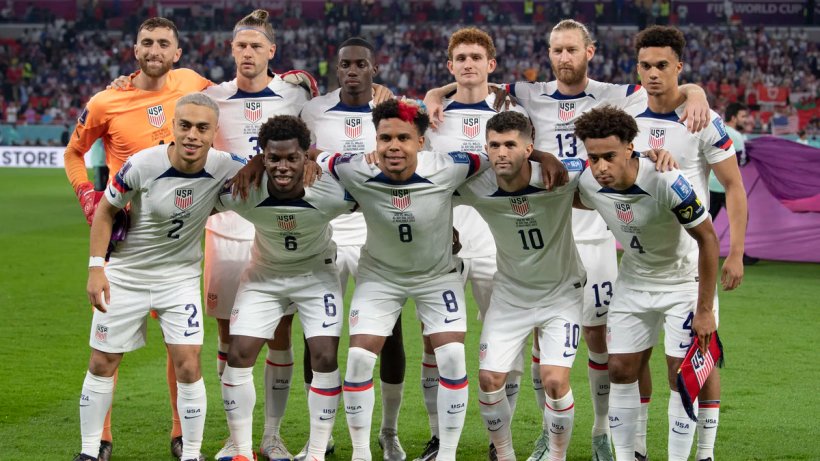
Between Pressures and Aspirations: The US National Team Enters the World Cup Seeking Glory
The United States enters the 2026 World Cup as one of the host countries, but it does so amid more doubts than optimism. After a turbulent period under coach Mauricio Pochettino, the team is under significant pressure to justify the high expectations and the fans who paid large sums for tournament tickets. Despite having a group of experienced players in Europe, recent results against major teams have raised many questions about its ability to go far in the tournament.
The U.S. national team benefited from direct qualification as the host, but it lost the opportunity to participate in qualifiers that could have helped the coaching staff better determine the team's identity. During Pochettino's tenure, the team underwent several tactical changes, yet the core idea remained focused on trying to control the game and maintain possession of the ball. Against lower-ranked teams like Paraguay, Australia, and Ecuador, the team held possession at nearly 60%, while the percentage approached balance against stronger teams like Uruguay, Japan, and Belgium.
Contrary to what Pochettino was known for during his coaching career, he did not rely heavily on high pressing, preferring a medium defense that limits the opponent's access to the final third. When in possession of the ball, the team attempts to build attacks through the center with a pair of holding midfielders and attacking midfielders behind the striker, while the full-backs or wingers are responsible for providing width on the flanks.
Christian Pulisic remains the standout name in the U.S. national team. The 27-year-old AC Milan player has borne the responsibility of leading the team since the United States failed to qualify for the 2018 World Cup and has become the most prominent face of the American project in recent years.
Although his current season has not been ideal, having experienced a scoring decline since last December, his ability to dribble, create opportunities, and shoot from tight spaces makes him the most dangerous player in the team's lineup and the top priority for opposing defenders.
Folarin Balogun is considered one of the most intriguing players in the U.S. national team. After a competition between the United States, England, and Nigeria to represent him internationally, he chose to play for the U.S. team, providing them with a striker they had been lacking for years.
Balogun is distinguished by his ability to finish attacks both inside and outside the penalty area. He moves intelligently between defenders and possesses a high scoring instinct. Despite his fluctuating performance with AS Monaco during some periods of the season, he entered the tournament in good form, making him one of the national team's key offensive weapons.
Chris Richards is considered one of the most important players in the American lineup despite the lack of spotlight on him. The Crystal Palace defender possesses a combination of defensive strength and the ability to build play from the back. He has also proven himself in recent years as one of the most consistent defenders in the national team.
His defensive partnership with his teammates is one of the team's key strengths, especially since the national team does not have much depth in the center-back position. If Richards manages to deliver a consistent performance during the tournament, he could become one of the main reasons for any potential American success.
Many view the 2026 World Cup as a historic opportunity to further solidify the position of soccer in the United States more than ever before. Local clubs and leagues have built their future plans hoping to capitalize on the momentum the tournament will create and attract new numbers of fans.
The US national team has not reached the quarter-finals of the World Cup since the 2002 edition. After years of talk about the "golden generation," reaching the advanced stages has become necessary to prove those predictions right and justify the significant investment in the American soccer project. Failure, however, might lead fans to call for a new phase and seek a generation capable of transforming the United States into one of the top ten teams in the world.
The U.S. national team benefited from direct qualification as the host, but it lost the opportunity to participate in qualifiers that could have helped the coaching staff better determine the team's identity. During Pochettino's tenure, the team underwent several tactical changes, yet the core idea remained focused on trying to control the game and maintain possession of the ball. Against lower-ranked teams like Paraguay, Australia, and Ecuador, the team held possession at nearly 60%, while the percentage approached balance against stronger teams like Uruguay, Japan, and Belgium.
Contrary to what Pochettino was known for during his coaching career, he did not rely heavily on high pressing, preferring a medium defense that limits the opponent's access to the final third. When in possession of the ball, the team attempts to build attacks through the center with a pair of holding midfielders and attacking midfielders behind the striker, while the full-backs or wingers are responsible for providing width on the flanks.
Christian Pulisic remains the standout name in the U.S. national team. The 27-year-old AC Milan player has borne the responsibility of leading the team since the United States failed to qualify for the 2018 World Cup and has become the most prominent face of the American project in recent years.
Although his current season has not been ideal, having experienced a scoring decline since last December, his ability to dribble, create opportunities, and shoot from tight spaces makes him the most dangerous player in the team's lineup and the top priority for opposing defenders.
Folarin Balogun is considered one of the most intriguing players in the U.S. national team. After a competition between the United States, England, and Nigeria to represent him internationally, he chose to play for the U.S. team, providing them with a striker they had been lacking for years.
Balogun is distinguished by his ability to finish attacks both inside and outside the penalty area. He moves intelligently between defenders and possesses a high scoring instinct. Despite his fluctuating performance with AS Monaco during some periods of the season, he entered the tournament in good form, making him one of the national team's key offensive weapons.
Chris Richards is considered one of the most important players in the American lineup despite the lack of spotlight on him. The Crystal Palace defender possesses a combination of defensive strength and the ability to build play from the back. He has also proven himself in recent years as one of the most consistent defenders in the national team.
His defensive partnership with his teammates is one of the team's key strengths, especially since the national team does not have much depth in the center-back position. If Richards manages to deliver a consistent performance during the tournament, he could become one of the main reasons for any potential American success.
Many view the 2026 World Cup as a historic opportunity to further solidify the position of soccer in the United States more than ever before. Local clubs and leagues have built their future plans hoping to capitalize on the momentum the tournament will create and attract new numbers of fans.
The US national team has not reached the quarter-finals of the World Cup since the 2002 edition. After years of talk about the "golden generation," reaching the advanced stages has become necessary to prove those predictions right and justify the significant investment in the American soccer project. Failure, however, might lead fans to call for a new phase and seek a generation capable of transforming the United States into one of the top ten teams in the world.
News Related

German Criticisms of American Organization Before the World Cup
German criticisms of America's preparations to host the 2026 World Cup.

Paraguay in the World Cup: A Return to Roots and Ambition to Regain Glory
Paraguay's return to the World Cup is thanks to defensive solidity and discipline.

The Strongest and Weakest Groups in the 2026 World Cup
The groups of the 2026 World Cup vary in strength according to Opta rankings.

Australia in the World Cup: Popovic's Resilience and Ambition to Break the Knockout Stage Curse
The Australian national team aims to win in the knockout stages in 2026.

Strange Competition Among World Cup Players
Kai Troin Becomes an Instagram Sensation Before the World Cup.

How Did Host Countries Perform in the World Cup?
Coinciding with the upcoming 2026 World Cup edition

Discover the Fastest Goal in World Cup History
Turkish striker Hakan Sukur etched his name in World Cup history

Officially: Turkey's Squad Announced for the World Cup
The head coach of the Turkish national team announced the final squad list that

Paraguay National Team Squad for the 2026 World Cup
Gustavo Alfaro, the head coach of the Paraguay national team, announced the final squad for the team.

Turkey: A Golden Generation Dreams of Repeating the 2002 Achievement
Turkey returns to the 2026 World Cup led by a talented generation.