

After a Long Absence... Scotland Chases a Historic Achievement
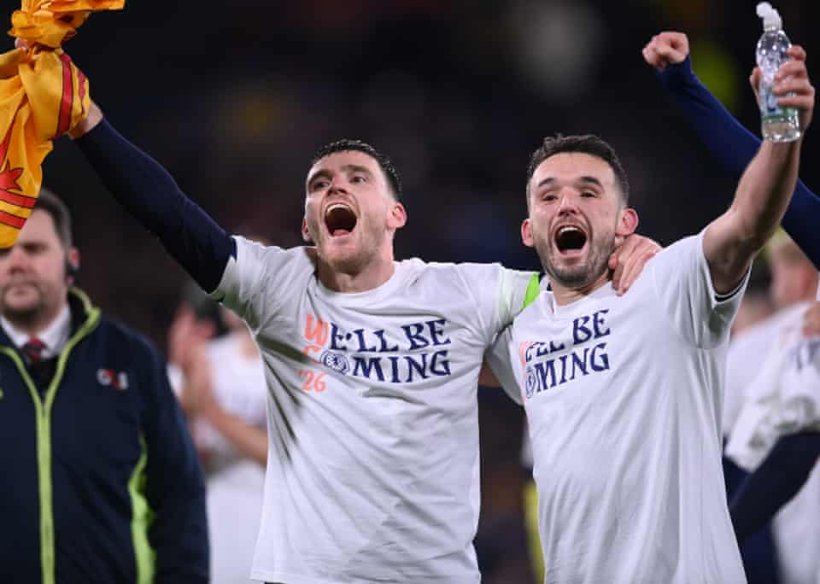
The Scotland national team has returned to the World Cup finals in 2026 for the first time since 1998, securing their qualification in dramatic fashion after defeating Denmark 4-2 in the European playoffs. This achievement marked the end of nearly three decades of waiting, amid great celebratory atmosphere in the country, after Scott McTominay scored a spectacular bicycle kick goal, followed by Kenny McLean's decisive goal from midfield.
Despite the euphoria of qualifying, the months leading up to the World Cup were not ideal for coach Steve Clarke, as his team suffered two friendly defeats against Japan and Ivory Coast without scoring a goal, before defeating the modest Curaçao with four goals. Additionally, some issues related to his contractual future increased concerns within the Scottish football community. Nevertheless, Clarke continues to rely on a group of experienced players who have accompanied him for many years.
The midfield is considered the strongest point of the team, with names like John McGinn and Scott McTominay, alongside captain Andrew Robertson as left-back and forward Che Adams. However, the team struggles in some positions, particularly goalkeeper and center-back, and the high average age raises some questions about the team's ability to keep up with major teams throughout the tournament.
The Scots heavily rely on the brilliance of McTominay, who has become the national team's star player in recent years following his remarkable development at the club level. Young winger Ben Doak also stands out as one of the anticipated names in the tournament, thanks to his speed and individual skills, while Ryan Christie is seen as one of the unsung heroes who play influential roles away from the spotlight.
The opening match against Haiti appears to be the key to Scotland's dreams of reaching the second round for the first time in its World Cup history, before facing two more challenging matches against Morocco and Brazil. Observers believe that the team's success in securing the first three points will give it a real opportunity to achieve a new historic milestone in its anticipated return to the global stage.
Despite the euphoria of qualifying, the months leading up to the World Cup were not ideal for coach Steve Clarke, as his team suffered two friendly defeats against Japan and Ivory Coast without scoring a goal, before defeating the modest Curaçao with four goals. Additionally, some issues related to his contractual future increased concerns within the Scottish football community. Nevertheless, Clarke continues to rely on a group of experienced players who have accompanied him for many years.
The midfield is considered the strongest point of the team, with names like John McGinn and Scott McTominay, alongside captain Andrew Robertson as left-back and forward Che Adams. However, the team struggles in some positions, particularly goalkeeper and center-back, and the high average age raises some questions about the team's ability to keep up with major teams throughout the tournament.
The Scots heavily rely on the brilliance of McTominay, who has become the national team's star player in recent years following his remarkable development at the club level. Young winger Ben Doak also stands out as one of the anticipated names in the tournament, thanks to his speed and individual skills, while Ryan Christie is seen as one of the unsung heroes who play influential roles away from the spotlight.
The opening match against Haiti appears to be the key to Scotland's dreams of reaching the second round for the first time in its World Cup history, before facing two more challenging matches against Morocco and Brazil. Observers believe that the team's success in securing the first three points will give it a real opportunity to achieve a new historic milestone in its anticipated return to the global stage.
News Related

The Strongest and Weakest Groups in the 2026 World Cup
The groups of the 2026 World Cup vary in strength according to Opta rankings.

Scotland National Team Fans Receive Shock Before World Cup Kickoff
Cancellation of Scotland Fans' Travel Permits Raises Their Concerns Before the World Cup.

Haiti Before the World Cup: A Surprising Force on the Field and Enthusiastic Crowds in the Stands
Haiti defeats New Zealand 4-0 and shows improvement before the World Cup.

Craig Gordon Enters History as the Oldest Player in the 2026 World Cup
Craig Gordon becomes the oldest player in the 2026 World Cup at the age of 43.

Morocco Challenges Brazil and Chases the Lead.. What Awaits the Atlas Lions in the World Cup
Morocco aims to qualify for the 2026 World Cup by facing Brazil.

Scotland Calls Up Tyler Fletcher to Replace Injured Gilmour in World Cup
The Scottish Football Association announced the call-up of Manchester United midfielder

Gilmour's Injury Raises Concerns for Scotland Ahead of World Cup
The Scotland national team received a worrying blow before the start of the 2026 World Cup.

Scotland Announces Final Squad for the World Cup
Scotland announces its squad for the 2026 World Cup.

Hendry, Al-Ittifaq Player, Adorns Scotland's Squad for the 2026 World Cup
Jack Hendry has been called up to the Scotland national team for the 2026 World Cup.

Record Increases in 2026 World Cup Bonuses
FIFA announced an increase in financial distributions