

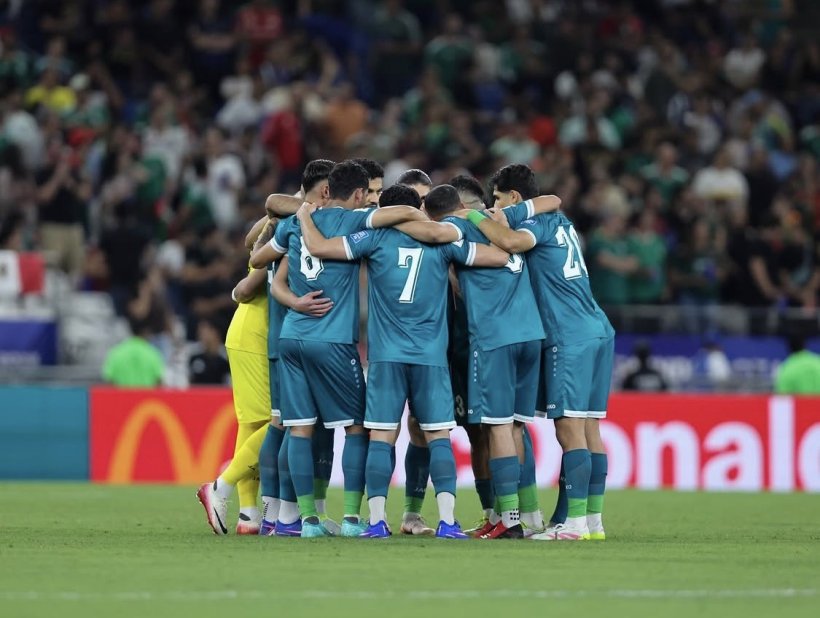
Learn About Iraq's Key Numbers After Qualifying for the World Cup
The path of the Iraqi national team to the 2026 World Cup finals was not paved with roses, but came through one of the most difficult and longest qualifying journeys in the history of Asian football. The 'Lions of Mesopotamia' played 20 full matches between qualifiers and playoffs, before securing their ticket with a precious win over Bolivia (2-1) in Monterrey, Mexico.
This number was not just a passing statistic, but reflects the magnitude of the challenges faced by the Iraqi team, from exhausting travels to match pressure, to continuous technical and mental tests that shaped the team's character and made it capable of decisive action in crucial moments.
Iraq's journey saw an upward trajectory, as the team played a long series of matches that required technical stability and tactical flexibility, before reaching the peak of the challenge in the global playoff held at the 'BBVA' stadium in Mexico, securing their second qualification ticket in history after the 1986 World Cup participation.
The uniqueness of this journey was not limited to its length but extended to include a unique experience, as the Iraqi team played matches in the three host countries of the tournament, starting with Mexico, which hosted the decisive match, passing through the United States where they will play group stage matches against France and Norway, and finally to Canada, which will witness the match against Senegal, providing the players with early experience of World Cup atmospheres.
This long path reflects the depth of the Iraqi lineup, as the technical staff led by Australian coach Graham Arnold had to rotate players and test multiple options, allowing them to assess the levels of all elements under competitive pressure, which is an important gain before embarking on the tournament.
Managing physical and mental effort was also a crucial factor in the team's success, especially with numerous trips and accumulated matches, yet the team showed great maturity in dealing with these circumstances, culminating in winning the playoff at an ideal time.
On the offensive side, the Iraqi team confirmed its possession of diverse solutions, as the qualifying goals in the decisive match were scored by Ali Al-Hamadi and Ayman Hussein, demonstrating the team's ability to capitalize on opportunities and make a difference when it matters most.
The Iraqi team will compete in the World Cup within Group Nine alongside France, Norway, and Senegal, in a group that carries significant tactical challenges given the diversity of playing styles among these teams, requiring high readiness and the ability to adapt to different scenarios.
This number was not just a passing statistic, but reflects the magnitude of the challenges faced by the Iraqi team, from exhausting travels to match pressure, to continuous technical and mental tests that shaped the team's character and made it capable of decisive action in crucial moments.
Iraq's journey saw an upward trajectory, as the team played a long series of matches that required technical stability and tactical flexibility, before reaching the peak of the challenge in the global playoff held at the 'BBVA' stadium in Mexico, securing their second qualification ticket in history after the 1986 World Cup participation.
The uniqueness of this journey was not limited to its length but extended to include a unique experience, as the Iraqi team played matches in the three host countries of the tournament, starting with Mexico, which hosted the decisive match, passing through the United States where they will play group stage matches against France and Norway, and finally to Canada, which will witness the match against Senegal, providing the players with early experience of World Cup atmospheres.
This long path reflects the depth of the Iraqi lineup, as the technical staff led by Australian coach Graham Arnold had to rotate players and test multiple options, allowing them to assess the levels of all elements under competitive pressure, which is an important gain before embarking on the tournament.
Managing physical and mental effort was also a crucial factor in the team's success, especially with numerous trips and accumulated matches, yet the team showed great maturity in dealing with these circumstances, culminating in winning the playoff at an ideal time.
On the offensive side, the Iraqi team confirmed its possession of diverse solutions, as the qualifying goals in the decisive match were scored by Ali Al-Hamadi and Ayman Hussein, demonstrating the team's ability to capitalize on opportunities and make a difference when it matters most.
The Iraqi team will compete in the World Cup within Group Nine alongside France, Norway, and Senegal, in a group that carries significant tactical challenges given the diversity of playing styles among these teams, requiring high readiness and the ability to adapt to different scenarios.
View Comments