


Iran Women's Team Members Return After Seeking Asylum in Australia
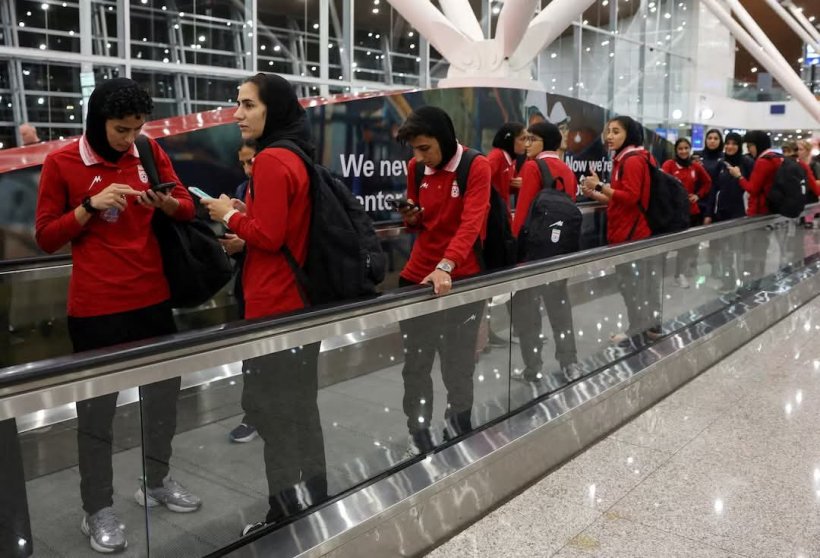
Several members of the Iranian women's national football team decided to return to their country after having sought asylum while the team was in Australia to participate in the Asian Cup.
The decision came days after several of them received humanitarian visas allowing them to stay, in a case that garnered widespread international attention.
According to reports, the team captain Zahra Kanbari, along with players Mona Hamoudi and Zahra Sarbali and a member of the coaching staff, left Australia heading to Kuala Lumpur to join the rest of the team delegation before returning to Tehran, despite some of them having the opportunity to stay in the country.
The issue emerged after some players refused to sing the Iranian national anthem before a match, which sparked sharp criticism in Iran and accusations of "treason" against them. This led several players to seek protection, fearing punishment upon their return.
Australian Interior Minister Tony Burke stated that the government provided the players with clear options to stay and offered them full support. However, he noted that the pressures and circumstances surrounding them might have influenced some of their decisions to return, leaving only two players from the group that sought asylum in Australia.
The decision came days after several of them received humanitarian visas allowing them to stay, in a case that garnered widespread international attention.
According to reports, the team captain Zahra Kanbari, along with players Mona Hamoudi and Zahra Sarbali and a member of the coaching staff, left Australia heading to Kuala Lumpur to join the rest of the team delegation before returning to Tehran, despite some of them having the opportunity to stay in the country.
The issue emerged after some players refused to sing the Iranian national anthem before a match, which sparked sharp criticism in Iran and accusations of "treason" against them. This led several players to seek protection, fearing punishment upon their return.
Australian Interior Minister Tony Burke stated that the government provided the players with clear options to stay and offered them full support. However, he noted that the pressures and circumstances surrounding them might have influenced some of their decisions to return, leaving only two players from the group that sought asylum in Australia.
News Related

Morata: I Didn't Deserve a Place in Spain's World Cup Squad
Morata admits to a modest performance and hopes to return to the Spanish national team.

Donis Sends a Strong Message to Green Fans Before the 2026 World Cup
Saudi fans are a major incentive for the national team in the World Cup.

Opening of the 2026 World Cup: A Grand Ceremony Combining Music, Culture, and Football
The 2026 World Cup kicks off in the United States, Mexico, and Canada.

Kano Talks About Saudi Ambitions in the World Cup
Mohammed Kano: Victory over Argentina is unforgettable, our goal is to surpass the group stage.

Azteca Stadium Returns to the Spotlight and Hosts the Opening of World Cup 2026
The 2026 World Cup kicks off in the USA, Mexico, and Canada.

Snakes and Crocodiles Near the Norwegian National Team Camp
Concerns about the readiness of the 2026 World Cup due to multiple crises.

Barcelona Submits Bid to Host 2029 Champions League Final
Barcelona submits a dossier to host the 2029 Champions League Final.

Barcelona Continues to Monitor Alex Remiro
Barcelona is considering signing a new goalkeeper to strengthen the team.

South Africa: Return After 16 Years and Dream of Advancing Beyond the Group Stage
South Africa returns to the 2026 World Cup under the leadership of Hugo Broos.

Revealing the Reasons for Referee Omar Artan's Ban from Entering the United States
An American official revealed that Somali referee Omar Abdulkadir Artan