


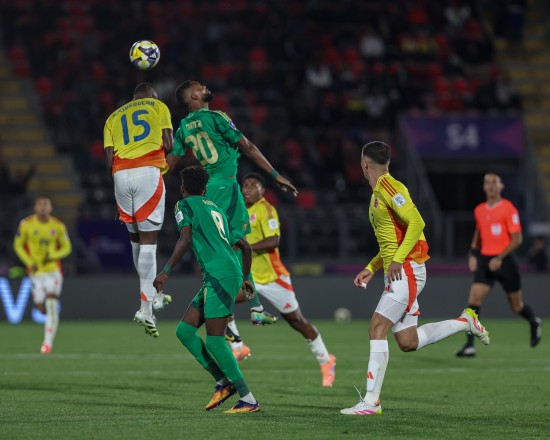
Application of VAR Technology in the Youth World Cup
The U-20 World Cup, currently underway, has seen the implementation of Video Assistant Referee (VAR) technology for the first time in an official competition under the supervision of FIFA. This technology aims to enhance fairness in matches by assisting referees in correcting clear errors while ensuring that stoppage times are not prolonged.
According to the new rules, coaches are allowed to request a video review only twice during a single match, provided there is a clear refereeing error that has not been spotted by the main referee. The use of the system is limited to specific situations including goals, penalty kicks, and direct red cards, and it is resorted to only when there is an obvious mistake. The coach is granted the authority to make the request immediately after the incident by signaling a finger twist in the air and handing a request card to the fourth official.
Players of the team also have the right to ask their coach to submit a request, which enhances the team’s role in the decision-making process and aims to reduce total reliance on referees. Each team has the right to submit only two requests throughout the match, with an additional feature allowing the team to retain its right if the referee changes their decision after the review. In this case, the request is considered as if it was never made, encouraging the cautious and effective use of the system. This approach aims to ensure the flow of matches without excessive interventions while maintaining the spirit of the game. This new system will continue to be tested throughout the youth World Cup, and it will be evaluated based on its results and effectiveness.
If successful, it is expected to be generalized in other tournaments under FIFA's umbrella, such as the senior World Cup, and this step is seen as an important development in the world of refereeing, combining technology with human expertise to achieve the highest levels of accuracy.
According to the new rules, coaches are allowed to request a video review only twice during a single match, provided there is a clear refereeing error that has not been spotted by the main referee. The use of the system is limited to specific situations including goals, penalty kicks, and direct red cards, and it is resorted to only when there is an obvious mistake. The coach is granted the authority to make the request immediately after the incident by signaling a finger twist in the air and handing a request card to the fourth official.
Players of the team also have the right to ask their coach to submit a request, which enhances the team’s role in the decision-making process and aims to reduce total reliance on referees. Each team has the right to submit only two requests throughout the match, with an additional feature allowing the team to retain its right if the referee changes their decision after the review. In this case, the request is considered as if it was never made, encouraging the cautious and effective use of the system. This approach aims to ensure the flow of matches without excessive interventions while maintaining the spirit of the game. This new system will continue to be tested throughout the youth World Cup, and it will be evaluated based on its results and effectiveness.
If successful, it is expected to be generalized in other tournaments under FIFA's umbrella, such as the senior World Cup, and this step is seen as an important development in the world of refereeing, combining technology with human expertise to achieve the highest levels of accuracy.
News Related

Japan Suffers a Major Blow with Wataru Endo's Absence and International Retirement
The Japanese national team received a major shock during its participation in the World Cup

Thunderstorms Threaten the Stability of the 2026 World Cup Matches
Thunderstorms pose a threat to the 2026 World Cup events in North America.

Wembley Competes with Spotify Camp Nou to Host 2029 Champions League Final
The competition to host the 2029 UEFA Champions League final has been decided, after

Núñez Awaits Barcelona's Moves Amid Uncertainty About His Future with Al Hilal
Uruguayan striker Darwin Núñez is anticipating developments regarding his future during the transfer window.

Duration of Hamza Abdel Karim's Contract with Barcelona After Activating Purchase Clause
The Egyptian forward Hamza Abdel Karim has become a player for the club

Copenhagen Awaits Bardghji's Future with Barcelona
The Danish club Copenhagen is anticipating developments regarding the future of its former player Roni Bardghji.

Barcelona Accelerates Steps to Renew Ferran Torres' Contract
Barcelona renews Ferran Torres' contract until June 2027.

Ajax Moves to Sign Ter Stegen
Ajax Amsterdam has placed German goalkeeper Marc-André ter Stegen

Officially.. Raja Announces Termination of Contract with Coach Fadlu Davids
The Moroccan Raja Athletic Club announced in an official statement, the termination

Crocodiles Near Portugal National Team Training Headquarters
Crocodiles and snakes pose a threat to the teams of the 2026 World Cup in America.