


Does Morocco Have the Potential for a New Global Achievement in the World Cup?
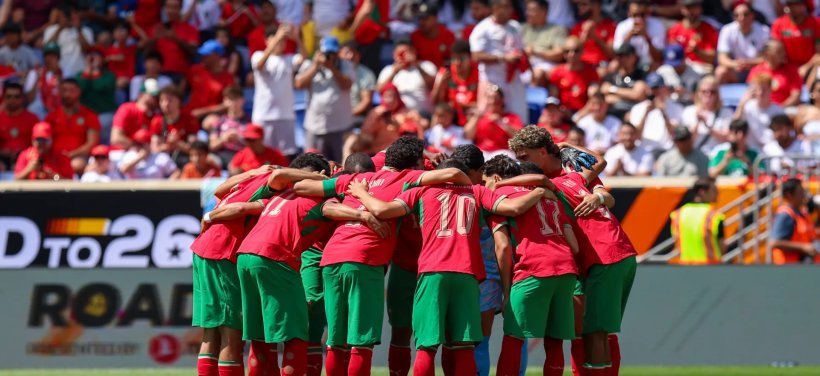
The Atlas Lions created one of the greatest World Cup stories in Qatar, and from Doha to the stadiums of the United States, Canada, and Mexico, where a new journey begins loaded with ambitions and pressures, the Moroccan national team enters the 2026 World Cup in a completely different manner. It is no longer a team seeking a historic surprise or a fleeting achievement, but has become a footballing force respected worldwide and is expected to confirm its place among the top teams. Between the legacy of the 2022 semi-finals and the challenges of the present, the most important question arises: Does Morocco have the necessary components to create a new global achievement?
With the referee's whistle signaling the end of the match between Morocco and Portugal in the quarter-finals of the 2022 World Cup, the Moroccan national team achieved a historic milestone by advancing to the semi-finals.
The victory of the "Atlas Lions" with Youssef En-Nesyri's goal granted Morocco a ticket to the semifinals, making them the first Arab and African team to reach this stage in World Cup history. Since that moment, the world's perception of Moroccan football has changed.
Today, with the approach of the new global event in the United States, Canada, and Mexico, a completely different question arises: Was what happened in Qatar a historical exception or the beginning of a new era in Moroccan football?
The answer is not related to emotion or nostalgia for a previous achievement, but rather to what the Moroccan national team currently possesses in terms of elements, experience, and a comprehensive sports project.
Qatar 2022 Figures: The Foundation on Which the Dream Was Built
Morocco entered the Qatar World Cup not as one of the favorites, but emerged from it as one of the biggest winners.
Morocco finished the group stage at the top of Group F with 7 points, having started their campaign with a goalless draw against Croatia, then securing an important 2-0 victory over Belgium, before defeating Canada 2-1 to confirm their qualification for the knockout stages.
The team then continued its historic journey by eliminating Spain in the round of 16 through penalty shootouts, before overcoming Portugal in the quarter-finals.
During the tournament, the Moroccan national team achieved a series of historic accomplishments that solidified its position on the global stage. It became the first Arab and African team to reach the World Cup semi-finals. Goalkeeper Yassine Bounou shone by keeping clean sheets in three matches and saving two crucial penalty kicks against Spain. Meanwhile, Youssef En-Nesyri reinforced his status as one of Morocco's top scorers in the World Cup, and coach Walid Regragui made history as the first Arab and African coach to lead a team to the tournament's semi-finals.
However, the significance of these numbers lies not only in their historical aspect but also in the fact that they have shaped a new identity for the Moroccan national team.
A golden generation still at the heart of the project.
Unlike many teams that reach the peak of their success and then enter a rebuilding phase, Morocco has an important advantage in that most of the key players from the Qatar achievement remain in the current lineup.
In goalkeeping, Yassine Bounou remains one of the best goalkeepers in the world and one of the most experienced in major matches.
Defensively, Achraf Hakimi leads the system as one of the most prominent full-backs in global football, alongside names with significant European experience like Noussair Mazraoui, with promising talents emerging such as Issa Diop, Chadi Riad, Zakaria El Wardi, and Anas Salah-Eddine.
In midfield, Sofyan Amrabat continues to play the role of the team's tactical leader, while Azzedine Ounahi, Ismail Saibari, and Bilal El Khannous provide a technical dimension and greater ability to control the pace of matches.
Offensively, the addition of Brahim Diaz has clearly raised the offensive ambitions of the team, alongside influential names like Ayoub El Kaabi and Soufiane Rahimi.
This combination gives Morocco one of the most balanced rosters in its history.
From Regragui to Mohamed Wahbi.. The Beginning of a New Era
The Moroccan national team enters the 2026 World Cup under a new technical phase led by Mohamed Wahbi, who took over after the end of Walid Regragui's era.
Although changing the coach before an event as significant as the World Cup might seem risky, Wahbi is well-acquainted with the map of Moroccan talents due to his previous work with the youth categories. The biggest challenge for the new coach is not to change the team's identity, but to develop it.
Morocco succeeded in Qatar thanks to defensive solidity, tactical organization, and collective discipline, but the 2026 edition requires adding more diverse attacking solutions and the ability to make a difference against teams that will play more cautiously against the "Atlas Lions."
Tactical power... Morocco's most dangerous weapon.
The team is distinguished by its ability to change its playing style according to the course of the match and the nature of the opponent. It excels in tight defensive organization, quick transitions to attack, and applying pressure at the right time. Additionally, it possesses enough flexibility to combine direct play with possession when needed.
Having players like Hakimi, Diaz, Ounahi, and Sabiri provides the coaching staff with diverse options that allow for adaptation to various scenarios.
Morocco no longer relies on a single star to make a difference, but rather on a comprehensive system capable of compensating for any potential absence.
The challenges that may hinder the Moroccan dream.
Despite all the positive indicators, the path to a new achievement will not be paved with roses; the first challenge lies in the pressures.
In Qatar, Morocco entered the tournament as an ambitious team without much pressure, but today it is a team that commands global respect, meaning that opponents will study it differently.
Secondly, the team still needs more effective offensive solutions against teams that rely on defensive clustering. In some recent matches, the need for a player capable of breaking individual balances and making a difference in tight spaces has become apparent.
The factor of injuries also remains an influential element, especially given the reliance on a set of key pillars that are difficult to replace easily.
A tough group but one that can be navigated.
The 2026 World Cup draw placed the Moroccan national team in Group C alongside Brazil, Scotland, and Haiti. It is a relatively balanced group despite the strength and significant history of the Brazilian team in the tournament.
Despite the strength of the Brazilian team, Morocco has proven in recent editions its ability to compete with the world's top teams. Achieving a positive result in the opening match will be a crucial key to boosting their chances of qualifying.
Against Scotland and Haiti, the Moroccan team possesses the technical capabilities and international experience that make it a contender for one of the qualifying spots to the next round.
Can Morocco surpass Qatar's achievement?
The realistic answer is yes, not because Morocco has better names than all its competitors, but because it has something more important: a comprehensive sports project, institutional stability, and a talent pool that expands year after year.
Qatar's achievement was not a stroke of luck, but the result of long-term work that began years ago. Today, the Moroccan national team enters the 2026 World Cup with significant World Cup experience, a selection of professional players at the highest levels, and a tactical school that has proven its ability to compete with the best.
The question within Morocco is no longer whether the national team is capable of competing in the World Cup, but rather how far it can go.
Between the experience of the generation of Hakimi, Bounou, and Amrabat, and the emergence of new names like Diaz, Khannous, and Saibari, the "Atlas Lions" have a real opportunity to continue making history.
Reaching the semifinals again may not be an easy task, but it is certain that Morocco enters the 2026 World Cup with the capabilities that make it one of the teams most capable of defying expectations and creating a new story on the world's biggest football stage.
With the referee's whistle signaling the end of the match between Morocco and Portugal in the quarter-finals of the 2022 World Cup, the Moroccan national team achieved a historic milestone by advancing to the semi-finals.
The victory of the "Atlas Lions" with Youssef En-Nesyri's goal granted Morocco a ticket to the semifinals, making them the first Arab and African team to reach this stage in World Cup history. Since that moment, the world's perception of Moroccan football has changed.
Today, with the approach of the new global event in the United States, Canada, and Mexico, a completely different question arises: Was what happened in Qatar a historical exception or the beginning of a new era in Moroccan football?
The answer is not related to emotion or nostalgia for a previous achievement, but rather to what the Moroccan national team currently possesses in terms of elements, experience, and a comprehensive sports project.
Qatar 2022 Figures: The Foundation on Which the Dream Was Built
Morocco entered the Qatar World Cup not as one of the favorites, but emerged from it as one of the biggest winners.
Morocco finished the group stage at the top of Group F with 7 points, having started their campaign with a goalless draw against Croatia, then securing an important 2-0 victory over Belgium, before defeating Canada 2-1 to confirm their qualification for the knockout stages.
The team then continued its historic journey by eliminating Spain in the round of 16 through penalty shootouts, before overcoming Portugal in the quarter-finals.
During the tournament, the Moroccan national team achieved a series of historic accomplishments that solidified its position on the global stage. It became the first Arab and African team to reach the World Cup semi-finals. Goalkeeper Yassine Bounou shone by keeping clean sheets in three matches and saving two crucial penalty kicks against Spain. Meanwhile, Youssef En-Nesyri reinforced his status as one of Morocco's top scorers in the World Cup, and coach Walid Regragui made history as the first Arab and African coach to lead a team to the tournament's semi-finals.
However, the significance of these numbers lies not only in their historical aspect but also in the fact that they have shaped a new identity for the Moroccan national team.
A golden generation still at the heart of the project.
Unlike many teams that reach the peak of their success and then enter a rebuilding phase, Morocco has an important advantage in that most of the key players from the Qatar achievement remain in the current lineup.
In goalkeeping, Yassine Bounou remains one of the best goalkeepers in the world and one of the most experienced in major matches.
Defensively, Achraf Hakimi leads the system as one of the most prominent full-backs in global football, alongside names with significant European experience like Noussair Mazraoui, with promising talents emerging such as Issa Diop, Chadi Riad, Zakaria El Wardi, and Anas Salah-Eddine.
In midfield, Sofyan Amrabat continues to play the role of the team's tactical leader, while Azzedine Ounahi, Ismail Saibari, and Bilal El Khannous provide a technical dimension and greater ability to control the pace of matches.
Offensively, the addition of Brahim Diaz has clearly raised the offensive ambitions of the team, alongside influential names like Ayoub El Kaabi and Soufiane Rahimi.
This combination gives Morocco one of the most balanced rosters in its history.
From Regragui to Mohamed Wahbi.. The Beginning of a New Era
The Moroccan national team enters the 2026 World Cup under a new technical phase led by Mohamed Wahbi, who took over after the end of Walid Regragui's era.
Although changing the coach before an event as significant as the World Cup might seem risky, Wahbi is well-acquainted with the map of Moroccan talents due to his previous work with the youth categories. The biggest challenge for the new coach is not to change the team's identity, but to develop it.
Morocco succeeded in Qatar thanks to defensive solidity, tactical organization, and collective discipline, but the 2026 edition requires adding more diverse attacking solutions and the ability to make a difference against teams that will play more cautiously against the "Atlas Lions."
Tactical power... Morocco's most dangerous weapon.
The team is distinguished by its ability to change its playing style according to the course of the match and the nature of the opponent. It excels in tight defensive organization, quick transitions to attack, and applying pressure at the right time. Additionally, it possesses enough flexibility to combine direct play with possession when needed.
Having players like Hakimi, Diaz, Ounahi, and Sabiri provides the coaching staff with diverse options that allow for adaptation to various scenarios.
Morocco no longer relies on a single star to make a difference, but rather on a comprehensive system capable of compensating for any potential absence.
The challenges that may hinder the Moroccan dream.
Despite all the positive indicators, the path to a new achievement will not be paved with roses; the first challenge lies in the pressures.
In Qatar, Morocco entered the tournament as an ambitious team without much pressure, but today it is a team that commands global respect, meaning that opponents will study it differently.
Secondly, the team still needs more effective offensive solutions against teams that rely on defensive clustering. In some recent matches, the need for a player capable of breaking individual balances and making a difference in tight spaces has become apparent.
The factor of injuries also remains an influential element, especially given the reliance on a set of key pillars that are difficult to replace easily.
A tough group but one that can be navigated.
The 2026 World Cup draw placed the Moroccan national team in Group C alongside Brazil, Scotland, and Haiti. It is a relatively balanced group despite the strength and significant history of the Brazilian team in the tournament.
Despite the strength of the Brazilian team, Morocco has proven in recent editions its ability to compete with the world's top teams. Achieving a positive result in the opening match will be a crucial key to boosting their chances of qualifying.
Against Scotland and Haiti, the Moroccan team possesses the technical capabilities and international experience that make it a contender for one of the qualifying spots to the next round.
Can Morocco surpass Qatar's achievement?
The realistic answer is yes, not because Morocco has better names than all its competitors, but because it has something more important: a comprehensive sports project, institutional stability, and a talent pool that expands year after year.
Qatar's achievement was not a stroke of luck, but the result of long-term work that began years ago. Today, the Moroccan national team enters the 2026 World Cup with significant World Cup experience, a selection of professional players at the highest levels, and a tactical school that has proven its ability to compete with the best.
The question within Morocco is no longer whether the national team is capable of competing in the World Cup, but rather how far it can go.
Between the experience of the generation of Hakimi, Bounou, and Amrabat, and the emergence of new names like Diaz, Khannous, and Saibari, the "Atlas Lions" have a real opportunity to continue making history.
Reaching the semifinals again may not be an easy task, but it is certain that Morocco enters the 2026 World Cup with the capabilities that make it one of the teams most capable of defying expectations and creating a new story on the world's biggest football stage.
News Related

Rodrigo: Facing Morocco in the World Cup Will Be Difficult
The Brazilian star Rodrigo acknowledged that facing the Moroccan national team in the opening

Bono Raises the Challenge Before Facing Brazil
Yassine Bounou Confirms Morocco's Readiness to Face Brazil in the World Cup.

AI Predictions Ignite Morocco vs Brazil Summit
Morocco faces Brazil, closely matched predictions, exciting match.
Ounahi: Morocco's Hidden Weapon Against the Samba
Azzedine Ounahi faces Brazil in the 2026 World Cup.

Brazilian Media: Morocco is a Formidable Opponent
Market value does not guarantee superiority in the World Cup.

Morocco vs Brazil: Match Schedule, Broadcasting Channels, and Expected Line-up
The eyes of Moroccan and Arab fans are set, this Saturday evening, towards the stadium

CAF: Morocco Carries Africa's Hopes Against Brazil
The anticipated Morocco vs Brazil match in the 2026 World Cup.

Neymar Threatened with Absence from World Cup Group Stage
Concerns about Neymar's readiness to participate in the 2026 World Cup.

Wehbe: Facing Brazil Will Reveal Our Level, and We Are Not Afraid of Them
The Morocco vs. Brazil match is a real test to evaluate the team's level.

New York Times Ranks Atlas Lions' Kit Among the Most Beautiful in World Cup 2026
International acclaim for Morocco's jersey ahead of the 2026 World Cup.