


Azteca Stadium Returns to the Spotlight and Hosts the Opening of World Cup 2026
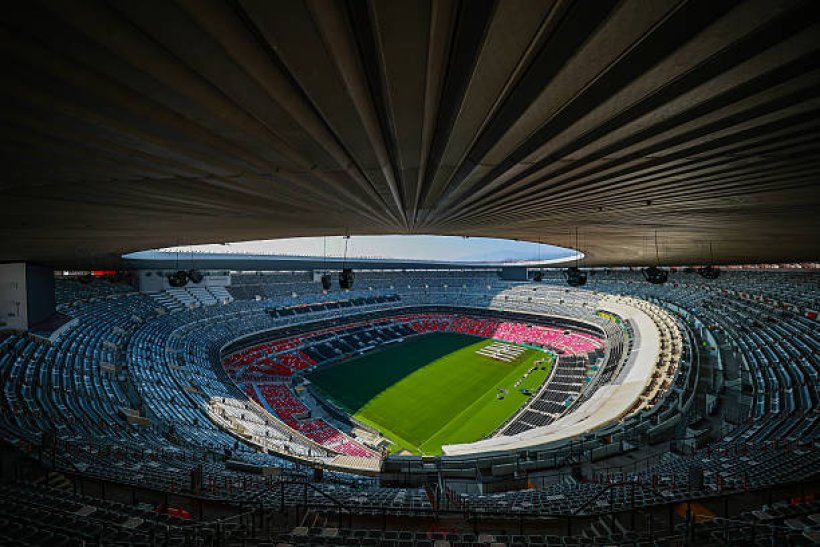
The 2026 World Cup kicks off in the United States, Mexico, and Canada on Thursday, June 11. The historic Azteca Stadium in Mexico, which will be referred to as Mexico City Stadium during the tournament according to FIFA's commercial regulations, will host the opening match between Mexico and South Africa.
The Azteca Stadium, which opened in 1966 and has a capacity of about 87,000 spectators, is the first stadium in the world to host three opening matches in World Cup history. It has also hosted 19 World Cup matches and two finals, in addition to being the venue for significant historical events such as Diego Armando Maradona's "Goal of the Century" and "Hand of God" goal in the 1986 tournament, as well as Brazil's victory in the 1970 edition led by Pelé.
The 2026 edition will be the largest in World Cup history, featuring 48 teams and 104 matches held across three host countries, bringing the Azteca Stadium back to the forefront of the global event once again.
In the context of preparations, the stadium underwent comprehensive development work on the playing field, with new turf installed by Royalverd, a company specializing in the construction and maintenance of sports fields, based in the city of Olot, Spain.
According to the company's statement, the stadium's field was constructed using a specially designed mixture of silica sand tailored for Mexico City's climatic conditions, featuring a high-capacity drainage system. Additionally, a hybrid technology reinforced with polyethylene fibers planted at a depth of 18 centimeters was employed to enhance the stability, durability, and quality of the playing surface.
The company confirmed that the project represents a significant milestone in its international journey, noting that it is currently operating in several countries including Spain, Mexico, Morocco, Peru, Panama, and Andorra, in addition to its collaboration with several Spanish league clubs.
The Azteca Stadium, which opened in 1966 and has a capacity of about 87,000 spectators, is the first stadium in the world to host three opening matches in World Cup history. It has also hosted 19 World Cup matches and two finals, in addition to being the venue for significant historical events such as Diego Armando Maradona's "Goal of the Century" and "Hand of God" goal in the 1986 tournament, as well as Brazil's victory in the 1970 edition led by Pelé.
The 2026 edition will be the largest in World Cup history, featuring 48 teams and 104 matches held across three host countries, bringing the Azteca Stadium back to the forefront of the global event once again.
In the context of preparations, the stadium underwent comprehensive development work on the playing field, with new turf installed by Royalverd, a company specializing in the construction and maintenance of sports fields, based in the city of Olot, Spain.
According to the company's statement, the stadium's field was constructed using a specially designed mixture of silica sand tailored for Mexico City's climatic conditions, featuring a high-capacity drainage system. Additionally, a hybrid technology reinforced with polyethylene fibers planted at a depth of 18 centimeters was employed to enhance the stability, durability, and quality of the playing surface.
The company confirmed that the project represents a significant milestone in its international journey, noting that it is currently operating in several countries including Spain, Mexico, Morocco, Peru, Panama, and Andorra, in addition to its collaboration with several Spanish league clubs.
News Related

Lozano, the Major Absentee from Mexico in the Global Event
Hirving Lozano misses the 2026 World Cup due to a dispute.

Mexico's Talent on the Verge of Entering World Cup History
Gilberto Mora may become the second youngest player in World Cup history.

Hugo Broos: I Dream of South Africa Reaching the Second Round
Hugo Broos Aims for a Historic Achievement with South Africa 2026.

Opening of the 2026 World Cup: A Grand Ceremony Combining Music, Culture, and Football
The 2026 World Cup kicks off in the United States, Mexico, and Canada.
South Africa: Return After 16 Years and Dream of Advancing Beyond the Group Stage
South Africa returns to the 2026 World Cup under the leadership of Hugo Broos.

Aguirre: We Are Fully Prepared.. The Opening Match Could Be a Great Day for Mexico
Aguirre confirms Mexico's readiness to face South Africa in the World Cup.

Tshabalala... The Goal That United South Africa, Even for a Second
Tshabalala's Goal in the 2010 World Cup Embodied South Africa's Dream.

Brazilian Crew Manages the Opening of the 2026 World Cup
The 2026 World Cup is organized for the first time with the participation of 48 teams.

Doubts Surround South Korea Before the World Cup
South Korea faces technical challenges and injuries ahead of the 2026 World Cup.

Czechia in the 2026 World Cup: A Return After a Long Absence with Limited Ambitions but a Present Focus
Czechia qualifies for the 2026 World Cup after a 20-year absence.