

Crowd trouble from MC Algiers in Nigeria puts club at risk of potential sanctions
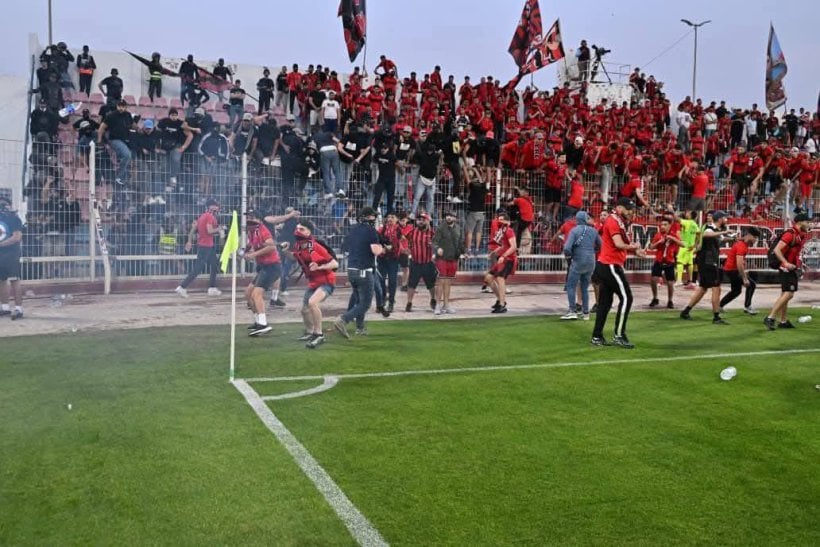
MC Algiers' loss to Nigeria's Rangers by two goals to nil led to riots inside the MKO Abiola Stadium in Abeokuta, following the conclusion of the first leg of the second preliminary round of the CAF Champions League. The incidents prompted the Nigerian club to write to the Confederation of African Football (CAF) requesting intervention.
Enugu Rangers secured the match with two late goals in the 82nd and 87th minutes, before the stands witnessed tensions and vandalism attributed to some supporters of the Algerian team, according to reports on the events that followed the match.
On Monday, October 19, 2026, officials from the Nigerian club sent a letter to CAF expressing their concerns about what they described as serious incidents inside the stadium, pointing to the vandalism of one of the doors, the entry of some fans without tickets, as well as damage to the seats in the stands.
Enugu Rangers have called on the continental body to take appropriate measures to prevent a repeat of these incidents during the return match scheduled for Friday, October 23 in Algeria, expressing concerns about the safety of all parties involved, while also expressing confidence in CAF's ability to handle the matter.
Videos circulating on social media show fans tampering with stadium equipment and making offensive gestures towards supporters of the Nigerian team and security personnel, as well as throwing projectiles from the stands. These scenes have drawn criticism due to the potential risks they pose to the safety of those present.
Footage has also shown individuals in the internal corridors of the stadium, areas not designated for the public. Reports have spoken of attempts to assault MC Algiers coach Khaled Ben Yahia, after some fans held him responsible for the loss, which necessitated the intervention of Nigerian police to ensure his safety.
In this context, Nigerian journalists have spoken about some MC Algiers players being subjected to assaults in the dressing room, allegations that could not be independently verified, while awaiting the full details of the events through official reports and relevant investigations.
The events in Abeokuta have brought attention back to the disciplinary sanctions previously imposed by CAF on MC Algiers, as the club was punished in April 2025 following incidents that accompanied their match against Orlando Pirates from South Africa in the quarter-finals of the CAF Champions League.
The sanctions included playing two matches without fans at the Algerian team's home ground, along with fines totaling $140,000. Additionally, assistant coach Mohamed Khazrouni was suspended for four matches, and player Abdelkader Osama Menizla received a two-match suspension, one of which is deferred for a year.
New events raise questions about the effectiveness of previous disciplinary measures in curbing riots, especially with the recurrence of violence and vandalism in several continental competitions recently.
The incident in Abeokuta is not the first of its kind in recent months, as violence erupted during the CAF Champions League semi-final second leg between Olympique Safi and USM Alger in April 2026.
Fans stormed the pitch at the Stade de la Mission in Safi, throwing projectiles and lighting flares, amidst insults and pushing that led to a delay of one hour and twenty minutes to the match.
The CAF Champions League final between USM Alger and Zamalek SC in May 2026 at the International Stadium in Cairo experienced disturbances following the penalty that secured the title, as several fans stormed the pitch, causing chaos and a stampede.
The recent incidents in Safi, Cairo, and Abeokuta raise discussions about the safety of African stadiums and the responsibility of clubs and fans in ensuring matches are conducted in safe conditions, away from behaviors that threaten the safety of players, coaching staff, and supporters.
Recent developments put CAF in a position to investigate reported incidents and verify their circumstances, determining responsibilities based on evidence and official reports before making any disciplinary decisions against the parties involved.
Maintaining order and preventing vandalism is essential for protecting African football and its image, as the effects of such actions are not limited to damaging stadium equipment or disrupting matches, but extend to endangering the lives of those present within sports facilities and harming the values of support and competition.


View Comments