

Iraq Prepares with Three Important Weapons Before Facing Spain in a Friendly
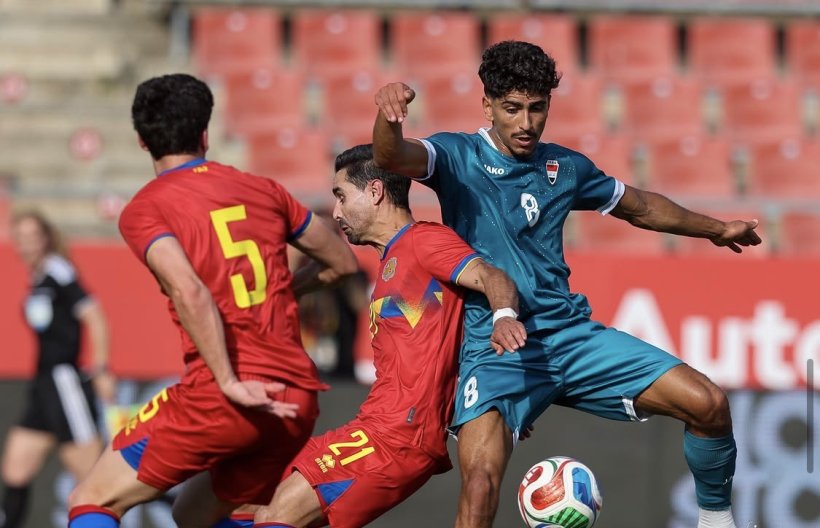
The Iraqi national team is preparing to conclude its training camp in Spain with a high-caliber match when it meets its Spanish counterpart in a friendly next Thursday in the city of La Coruña. The match represents the final stop for the Lions of Mesopotamia before leaving Spanish soil, and it comes after a valuable victory over Andorra with a goal scored by striker Ali Youssef, marking his first scoring appearance in an Iraqi jersey.
The camp also saw the participation of three new names for the first time with the team: Youssef Al-Nasrawi, Ahmed Qasim, and Dario, in a move reflecting Graham Arnold's approach to expanding options before the 2026 World Cup finals, which will kick off next June in the United States, Canada, and Mexico.
Former Iraqi national team technical analyst Ali Al-Nuaimi believes that the Andorra match was more beneficial for the technical staff led by Arnold than for the fans and followers. He told winwin: "The match presented the training staff with a set of tactical and technical scenes during both halves, which need to be reviewed and fixed more precisely before announcing the final World Cup list."
Al-Nuaimi pointed out that the final evaluation of the new elements - Youssef Al-Nasrawi, Dario Namo, and Ahmed Qasim - and their integration with key names like Peter Korkis, Aymar Sher, Zaid Ismail, Zidan Iqbal, Ali Youssef, Mohannad Ali, Ahmed McKenzie, and Marco Faraj, will become clearer after the upcoming encounters, especially the last match against Venezuela.
The Iraqi analyst considered the match against Spain to be "the first and last rehearsal" for Arnold to apply the philosophy of organized late defense. He added: "This match will test the players' ability to execute quick transitions and get the ball out from the back under the pressure of La Roja players. I expect the Iraqi team to try to surprise the Spaniards with strong performance because delivering a big match will be an important moral incentive before entering World Cup challenges."
The importance of the encounter lies in giving Arnold the opportunity to apply more than one tactical model in one situation. Al-Nuaimi explained that the coach will work on "enhancing defensive organization and mental toughness in preventive marking and coverage when the opponent possesses the ball, while maintaining organized numerical density behind the ball."
These ideas coincide with training on building play from the back under pressure and executing rapid transitions from defense to attack, which are the weapons Iraq will need against teams like France and Norway in the World Cup.
Al-Nuaimi stressed that facing a team the size of Spain, the European champion, represents a gain for Iraq even if it does not end with a positive result. He said: "Playing against a world-class team raises the team's value both technically and in rankings. Even a narrow loss with organized performance gives a much better image than a big win over a modest opponent."
The Australian coach enters the match with a clear mentality: the result is not the goal, but the image, performance, and tactical commitment. The Spain camp was an opportunity to establish the "family culture" he talks about, bringing local and professional players together under one roof, as seen in the collective discipline against Andorra.
The camp also saw the participation of three new names for the first time with the team: Youssef Al-Nasrawi, Ahmed Qasim, and Dario, in a move reflecting Graham Arnold's approach to expanding options before the 2026 World Cup finals, which will kick off next June in the United States, Canada, and Mexico.
Former Iraqi national team technical analyst Ali Al-Nuaimi believes that the Andorra match was more beneficial for the technical staff led by Arnold than for the fans and followers. He told winwin: "The match presented the training staff with a set of tactical and technical scenes during both halves, which need to be reviewed and fixed more precisely before announcing the final World Cup list."
Al-Nuaimi pointed out that the final evaluation of the new elements - Youssef Al-Nasrawi, Dario Namo, and Ahmed Qasim - and their integration with key names like Peter Korkis, Aymar Sher, Zaid Ismail, Zidan Iqbal, Ali Youssef, Mohannad Ali, Ahmed McKenzie, and Marco Faraj, will become clearer after the upcoming encounters, especially the last match against Venezuela.
The Iraqi analyst considered the match against Spain to be "the first and last rehearsal" for Arnold to apply the philosophy of organized late defense. He added: "This match will test the players' ability to execute quick transitions and get the ball out from the back under the pressure of La Roja players. I expect the Iraqi team to try to surprise the Spaniards with strong performance because delivering a big match will be an important moral incentive before entering World Cup challenges."
The importance of the encounter lies in giving Arnold the opportunity to apply more than one tactical model in one situation. Al-Nuaimi explained that the coach will work on "enhancing defensive organization and mental toughness in preventive marking and coverage when the opponent possesses the ball, while maintaining organized numerical density behind the ball."
These ideas coincide with training on building play from the back under pressure and executing rapid transitions from defense to attack, which are the weapons Iraq will need against teams like France and Norway in the World Cup.
Al-Nuaimi stressed that facing a team the size of Spain, the European champion, represents a gain for Iraq even if it does not end with a positive result. He said: "Playing against a world-class team raises the team's value both technically and in rankings. Even a narrow loss with organized performance gives a much better image than a big win over a modest opponent."
The Australian coach enters the match with a clear mentality: the result is not the goal, but the image, performance, and tactical commitment. The Spain camp was an opportunity to establish the "family culture" he talks about, bringing local and professional players together under one roof, as seen in the collective discipline against Andorra.
News Related

The Iraqi Federation Denies Request for Local Assistant for Arnold
Sources within the Iraqi Football Federation denied circulating news about

Iraq Defeats Andorra 1-0 in Friendly Match
The Iraqi national team achieved a well-deserved victory over its Andorran counterpart with a single goal.

Deschamps Warns Against Underestimating the Iraqi National Team
The World Cup requires respect for all national teams and avoiding complacency.

Iraq's Expected Lineup Against Andorra
The Iraqi national team is preparing to play its first friendly match within the ongoing training camp.

Learn about the Channels Broadcasting the Iraq vs Andorra Match
The Iraqi national team begins its preparatory journey for the 2026 World Cup finals with its first
Graham Arnold Comments Before Facing Andorra
Australian coach Graham Arnold spoke at the press conference ahead of the match against Andorra.

Revealing the Referee for the Iraq vs Andorra Match
Official sources have revealed the appointment of the international Spanish referee Ricardo De

Iraq Faces Andorra: Learn About the Details of the Encounter
The Iraqi national team is preparing to play its first friendly match tomorrow evening, Friday.

Latest Updates on Lamine Yamal's Recovery
Lamine Yamal, the star of FC Barcelona, continues his rehabilitation program from injury.

Cucurella and Grimaldo Reach the World Cup as Barcelona Continues Search for a Left-Back
Luis de la Fuente's squad of 26 players has been announced