

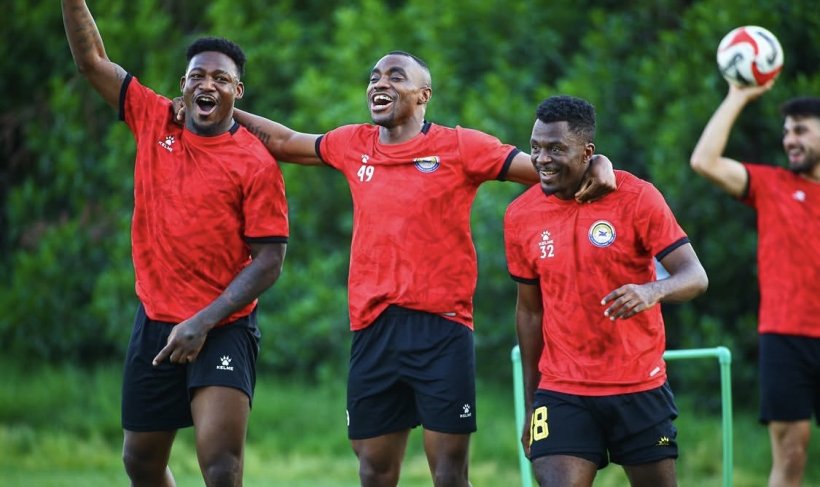
Three Key Tasks for Al-Zawraa to Overcome Amanat Baghdad
Al-Zawraa Club enters its match against Amanat Baghdad tomorrow, Sunday, with an understanding that the task will not be easy despite the point and ranking difference. The 'Nawras' are required to secure all three points to maintain the momentum of recent victories, but achieving this requires executing three main tasks at Captain Sharar Haider Stadium.
Amanat Baghdad is a team that plays well against top teams with an organized defensive style and quick counterattacks, especially on their home ground. The first task for Al-Zawraa is to score an early goal that disrupts the hosts' plans and forces them out of their zones.
The scenario of the first-leg match, which ended 3-2 with difficulty, should not be repeated. Al-Zawraa suffered then from conceding two goals despite winning, and the reason was the delay in settling matters. Luay Salah is required to find solutions to penetrate Amanat's defense from the first minutes, whether through accurate crosses, shots from outside the area, or off-the-ball movements from Murad Mohammed and Mohannad Abdul-Rahim.
An early goal means psychologically killing the match because when Amanat Baghdad falls behind, they lose their main weapon, which is the compact defense and reliance on counterattacks.
Al-Zawraa enters the match with a long list of absentees: Amer Jamous is suspended, and Dhurgham Ismail and Abdullah Naseeb are out of consideration, with doubts about the readiness of Hassan Abdul-Karim, Brian, and Karrar Nabil. Additionally, the team suffers from clear physical fatigue due to the match pressure, as confirmed by Luay Salah.
The second task is to manage these conditions wisely. The substitutes must be up to the responsibility, and rotation in the second half is necessary to maintain physical rhythm. The 'one team culture' that Salah talked about must appear on the ground so that the team does not feel the absence of any player.
Dealing with Amanat Baghdad's set-pieces will be a real test for the defense in the absence of Amer Jamous. Maitham Jabbar and Mohammed Qasim have a doubled role in leading the backline and preventing any surprises.
The biggest danger facing Al-Zawraa tomorrow is underestimating Amanat Baghdad due to its 17th position and only 28 points. Amanat is fighting to escape relegation, and teams battling to stay are at their most dangerous when facing top teams on their home ground.
The third task is mental decisiveness. Al-Zawraa players must enter the match as if it were a final, regardless of the standings. Amanat Baghdad is a 'respectable team and always difficult at Al-Karkh Stadium,' as Luay Salah said, and they have previously embarrassed top teams this season.
Killing the match with a second goal after taking the lead is essential, and not giving Amanat any hope of a comeback. Al-Zawraa stumbled a lot this season due to complacency after scoring, which cannot be repeated if the team wants to reach 60 points and put pressure on Erbil in third place.
Al-Zawraa has 57 points in fifth place, and winning tomorrow raises them to 60 points, putting them one step away from the top four. Any result other than a win means giving Erbil and Talaba a chance to distance themselves, and possibly returning to the complex calculations cycle.
Amanat Baghdad is a team that plays well against top teams with an organized defensive style and quick counterattacks, especially on their home ground. The first task for Al-Zawraa is to score an early goal that disrupts the hosts' plans and forces them out of their zones.
The scenario of the first-leg match, which ended 3-2 with difficulty, should not be repeated. Al-Zawraa suffered then from conceding two goals despite winning, and the reason was the delay in settling matters. Luay Salah is required to find solutions to penetrate Amanat's defense from the first minutes, whether through accurate crosses, shots from outside the area, or off-the-ball movements from Murad Mohammed and Mohannad Abdul-Rahim.
An early goal means psychologically killing the match because when Amanat Baghdad falls behind, they lose their main weapon, which is the compact defense and reliance on counterattacks.
Al-Zawraa enters the match with a long list of absentees: Amer Jamous is suspended, and Dhurgham Ismail and Abdullah Naseeb are out of consideration, with doubts about the readiness of Hassan Abdul-Karim, Brian, and Karrar Nabil. Additionally, the team suffers from clear physical fatigue due to the match pressure, as confirmed by Luay Salah.
The second task is to manage these conditions wisely. The substitutes must be up to the responsibility, and rotation in the second half is necessary to maintain physical rhythm. The 'one team culture' that Salah talked about must appear on the ground so that the team does not feel the absence of any player.
Dealing with Amanat Baghdad's set-pieces will be a real test for the defense in the absence of Amer Jamous. Maitham Jabbar and Mohammed Qasim have a doubled role in leading the backline and preventing any surprises.
The biggest danger facing Al-Zawraa tomorrow is underestimating Amanat Baghdad due to its 17th position and only 28 points. Amanat is fighting to escape relegation, and teams battling to stay are at their most dangerous when facing top teams on their home ground.
The third task is mental decisiveness. Al-Zawraa players must enter the match as if it were a final, regardless of the standings. Amanat Baghdad is a 'respectable team and always difficult at Al-Karkh Stadium,' as Luay Salah said, and they have previously embarrassed top teams this season.
Killing the match with a second goal after taking the lead is essential, and not giving Amanat any hope of a comeback. Al-Zawraa stumbled a lot this season due to complacency after scoring, which cannot be repeated if the team wants to reach 60 points and put pressure on Erbil in third place.
Al-Zawraa has 57 points in fifth place, and winning tomorrow raises them to 60 points, putting them one step away from the top four. Any result other than a win means giving Erbil and Talaba a chance to distance themselves, and possibly returning to the complex calculations cycle.


View Comments