


The Curse of the First Goal Haunts Real Madrid and Manchester City Clashes
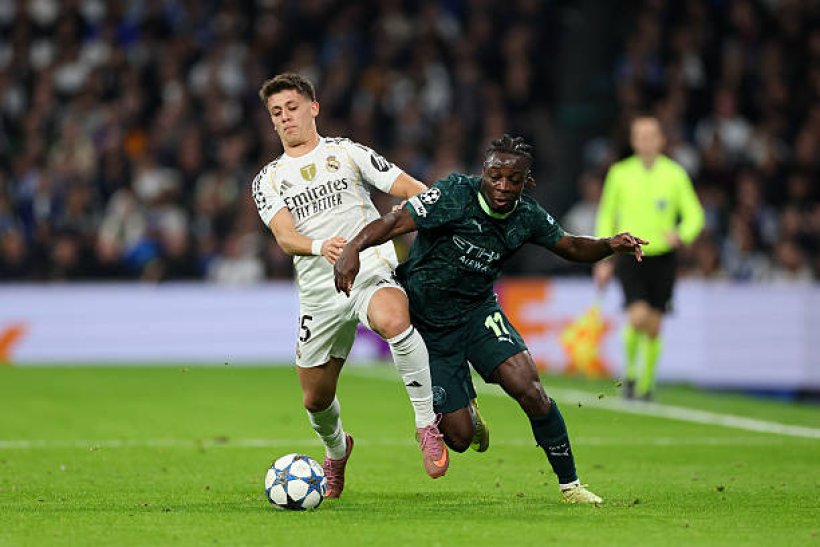
The newspaper 'Marca' confirmed that the recent encounters between Real Madrid and Manchester City have witnessed a strange phenomenon, where the team that scores the first goal often ends up losing the match or being eliminated from the round. This phenomenon has been repeated in six previous knockout encounters, in addition to a group stage match during the current season.
This rule began in 2020, when the two teams met in five knockout encounters, in the 2019/2020 season. Real Madrid initially took the lead with Isco's goal in the first leg, but Manchester City turned the result around thanks to goals from Gabriel Jesus and Kevin De Bruyne, allowing the English team to advance to the next round.
In the 2021/2022 season, City opened the scoring in the first leg, but ended up being eliminated after a comeback by Real Madrid in the return leg thanks to goals from Rodrygo and a penalty by Benzema. In the 2022/2023 season, Real Madrid took the lead first, but Manchester City secured qualification after a decisive return leg, and in the following season 2023/2024, City scored first, but Real Madrid won in penalties after a tie in the aggregate score.
The 2024/2025 season saw Manchester City take the lead first, but Real Madrid came back in the return leg to win thanks to a hat-trick by Kylian Mbappe, ending City's chances of qualifying. Even in the current season 2025/2026, the same pattern returned, where Real Madrid opened the scoring through Rodrygo but lost to City 2-1 in a group stage match.
The report indicates that the last exception to this rule was in the 2015/2016 UEFA Champions League semi-final, when Real Madrid's only goal was scored by Fernando Reges by mistake in the return leg, allowing the Spanish team to advance to the final and clinch the title against Juventus.
The newspaper explains that this recurring phenomenon makes the upcoming encounter an opportunity to break the strange pattern, especially as the two teams meet under different circumstances, with Real Madrid suffering from several absences including Mbappe, Bellingham, Militao, David Alaba, Dani Ceballos, Rodrygo, and Carreras, while Manchester City misses Gvardiol, Kovacic, and Stefan Ortega.
This rule began in 2020, when the two teams met in five knockout encounters, in the 2019/2020 season. Real Madrid initially took the lead with Isco's goal in the first leg, but Manchester City turned the result around thanks to goals from Gabriel Jesus and Kevin De Bruyne, allowing the English team to advance to the next round.
In the 2021/2022 season, City opened the scoring in the first leg, but ended up being eliminated after a comeback by Real Madrid in the return leg thanks to goals from Rodrygo and a penalty by Benzema. In the 2022/2023 season, Real Madrid took the lead first, but Manchester City secured qualification after a decisive return leg, and in the following season 2023/2024, City scored first, but Real Madrid won in penalties after a tie in the aggregate score.
The 2024/2025 season saw Manchester City take the lead first, but Real Madrid came back in the return leg to win thanks to a hat-trick by Kylian Mbappe, ending City's chances of qualifying. Even in the current season 2025/2026, the same pattern returned, where Real Madrid opened the scoring through Rodrygo but lost to City 2-1 in a group stage match.
The report indicates that the last exception to this rule was in the 2015/2016 UEFA Champions League semi-final, when Real Madrid's only goal was scored by Fernando Reges by mistake in the return leg, allowing the Spanish team to advance to the final and clinch the title against Juventus.
The newspaper explains that this recurring phenomenon makes the upcoming encounter an opportunity to break the strange pattern, especially as the two teams meet under different circumstances, with Real Madrid suffering from several absences including Mbappe, Bellingham, Militao, David Alaba, Dani Ceballos, Rodrygo, and Carreras, while Manchester City misses Gvardiol, Kovacic, and Stefan Ortega.
News Related

Juventus Considers John Stones for Defense Reinforcement
Juventus is studying the possibility of signing the English defender John Stones.

Brahim Diaz Not on the Departure List and Enjoys Mourinho's Trust at Real Madrid
Brahim Diaz continues with Real Madrid according to Mourinho's vision.

Revealing Rodrigo's Condition
Journalist Siro Lopez revealed an important update regarding the physical condition

Gvardiol Halts Contract Renewal Due to Real Madrid
Mourinho seeks to sign Josko Gvardiol to strengthen Real Madrid's defense.

Fulham in Official Talks with Arbeloa
Fulham negotiates with Arbeloa to take over the team's coaching.

Amid Uncertainty About His Future.. Alvarez's Preferred Destination Revealed
Italian journalist Matteo Moretto revealed during his appearance on the program 'La'...

Vlahovic Offered to Real Madrid, Barcelona, and Atletico Madrid
Vlahovic has been presented to European clubs as a free transfer deal.

English Struggle to Sign Real Madrid Star
Arsenal and Liverpool have entered the race with Chelsea to

Rüdiger Reaches Agreement with Real Madrid on Contract Renewal
The renewal of German defender Antonio Rüdiger's contract with Real Madrid

Real Madrid's Statement Surprises Mourinho
Mourinho is surprised by Real Madrid's offer for Alvarez.