


Olé Newspaper: Morocco Outpaces Spain in the Race to Host the World Cup Final
The widely circulated Argentine sports newspaper Olé revealed the intensifying competition between Morocco and Spain, partners in the bid to host the 2030 World Cup, to secure the honor of hosting the final match of the world's largest football event. The newspaper described this race as one of the most exciting conflicts behind the scenes of sports and diplomacy.
The newspaper described this competition as a "heated conflict" between two strong bids, each possessing clear strengths. However, it leaned towards Morocco, considering that the Moroccan project is based on an ambitious future vision that might give it a decisive advantage when making the final decision.
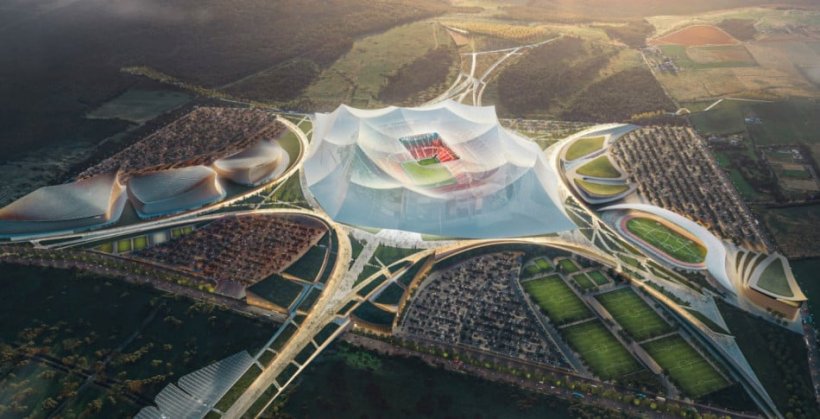
According to Olé, Morocco is betting on the Hassan II Grand Stadium project in the city of Benslimane, which the newspaper described as the anticipated "jewel" for the 2030 World Cup. It noted that construction is ongoing for a massive sports complex expected to become the largest in the world, with a capacity of up to 115,000 spectators, a first in the history of World Cup tournaments.
The newspaper highlighted that the modernity of the stadium, its contemporary design, and its record capacity represent the key strengths of the Moroccan bid, which aims to deliver an exceptional final and an unprecedented fan experience that matches the scale of the global event.
On the other hand, Spain is promoting the Santiago Bernabéu Stadium in the capital, Madrid, as an official candidate to host the final match. Despite undergoing a comprehensive renovation that has made it one of the most advanced stadiums in the world, the newspaper pointed out some potential challenges, including technical observations related to meeting FIFA standards, as well as local legal disputes related to noise and services surrounding the stadium.
Olé confirmed that the final decision rests with the International Federation of Association Football (FIFA), which will make its decision based on precise technical evaluation reports of both projects. While Spain relies on its organizational experience and the symbolism of its historic stadium, Morocco is betting on modernity and large scale as factors that might tip the balance in its favor.
It is noted that Portugal, the third partner in the joint bid, has officially withdrawn from the race to host the final, as it does not have a stadium that meets the minimum capacity requirement of 80,000 spectators. This leaves the competition between Morocco and Spain, in a sporting and diplomatic battle that will determine the venue for the 2030 World Cup final.
The newspaper described this competition as a "heated conflict" between two strong bids, each possessing clear strengths. However, it leaned towards Morocco, considering that the Moroccan project is based on an ambitious future vision that might give it a decisive advantage when making the final decision.
According to Olé, Morocco is betting on the Hassan II Grand Stadium project in the city of Benslimane, which the newspaper described as the anticipated "jewel" for the 2030 World Cup. It noted that construction is ongoing for a massive sports complex expected to become the largest in the world, with a capacity of up to 115,000 spectators, a first in the history of World Cup tournaments.
The newspaper highlighted that the modernity of the stadium, its contemporary design, and its record capacity represent the key strengths of the Moroccan bid, which aims to deliver an exceptional final and an unprecedented fan experience that matches the scale of the global event.
On the other hand, Spain is promoting the Santiago Bernabéu Stadium in the capital, Madrid, as an official candidate to host the final match. Despite undergoing a comprehensive renovation that has made it one of the most advanced stadiums in the world, the newspaper pointed out some potential challenges, including technical observations related to meeting FIFA standards, as well as local legal disputes related to noise and services surrounding the stadium.
Olé confirmed that the final decision rests with the International Federation of Association Football (FIFA), which will make its decision based on precise technical evaluation reports of both projects. While Spain relies on its organizational experience and the symbolism of its historic stadium, Morocco is betting on modernity and large scale as factors that might tip the balance in its favor.
It is noted that Portugal, the third partner in the joint bid, has officially withdrawn from the race to host the final, as it does not have a stadium that meets the minimum capacity requirement of 80,000 spectators. This leaves the competition between Morocco and Spain, in a sporting and diplomatic battle that will determine the venue for the 2030 World Cup final.
News Related

Officially.. Raja Announces Termination of Contract with Coach Fadlu Davids
The Moroccan Raja Athletic Club announced in an official statement, the termination

Crocodiles Near Portugal National Team Training Headquarters
Crocodiles and snakes pose a threat to the teams of the 2026 World Cup in America.

Quinones: This is the Secret of My Celebration, and I Congratulated Jimenez on His Goal
Mexico's victory over South Africa 2-0 in the 2026 World Cup.

Numbers and Statistics After the Mexico vs. South Africa Match
The Mexican national team began its journey in the 2026 World Cup with a valuable victory

Mexico Opens World Cup with Victory Over South Africa on a Night of Red Cards
Mexico defeats South Africa 2-0 in the 2026 World Cup.

Exclusion of Pepe Joining Mourinho's Staff at Real Madrid
Pepe will not join Mourinho's technical staff at Real Madrid.

Egypt National Team Retains 29th Place in FIFA Ranking Before World Cup
The Egypt national team ranks 29th globally and fifth in Africa.

Julian Quiñones Opens First Goal of the 2026 World Cup
The opening match of the 2026 World Cup between the Mexican team and its counterpart

Courtois: Egypt is our strongest opponent.. We must be cautious of their counterattacks
Courtois: Egypt is a strong opponent, we are focusing on the first match.

Tunisian Club Africain Invites Zamalek for Two Friendly Matches
Invitation to Zamalek for two friendly matches in celebration of both teams winning their respective leagues.