








Was Norway's Third Goal Against Iraq a Mistake?
The third goal of the Norwegian national team against Iraq sparked widespread controversy following the end of the match, which the Vikings won 4-1 in the opening matches of Group Nine at the 2026 World Cup. Former Egyptian international referee Gamal Al-Ghandour confirmed that the goal carries a 'suspicion of invalidity' due to a foul committed by Erling Haaland inside the penalty area.
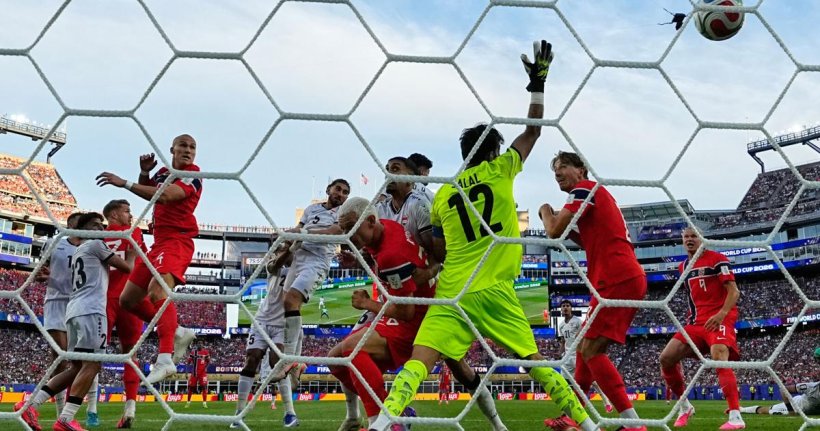
The match, held at 'Gillette Stadium' in Boston, witnessed Norwegian dominance in the second half. In the 76th minute, the referee awarded a corner kick to the Vikings. The ball was executed inside the Lions of Mesopotamia's penalty area, and amidst the crowding, Haaland forcefully pushed one of the Iraqi defenders before the ball reached Leo Ostigard's head, who did not hesitate to put it in the net, announcing the third goal.
In his analysis of the situation via the winwin platform, Al-Ghandour explained that the scene of the third goal 'was not correct in terms of refereeing.' He confirmed that the Manchester City striker committed a clear foul on an Iraqi defender inside the area before the ball reached him, which should have led the referee, Pierre Atcho, to award a foul in favor of Iraq and cancel the goal.
The Egyptian referee added: 'Haaland used excessive force to push the defender and prevent him from jumping. This is a clear foul in football and does not require interpretation. The referee should have stopped the play and either retaken the corner kick or awarded a foul.'
The situation reignited the debate about the Video Assistant Referee (VAR) technology in the World Cup, especially after the criticisms it faced in the Qatar-Switzerland match due to a controversial Swiss goal over offside suspicions. The absence of intervention by the room in Haaland's scene surprised the followers, as it seemed that the room, led by Saudi Abdullah Al-Shahri and Qatari Khamis Al-Marri, did not see Haaland's push as worthy of canceling the goal.
The result placed Iraq at the bottom of Group Nine standings with no points, while Norway topped with three points, ahead of France on goal difference, which defeated Senegal 3-1 to occupy second place.


View Comments