

How Will Real Madrid Change with Dani Carvajal's Return?
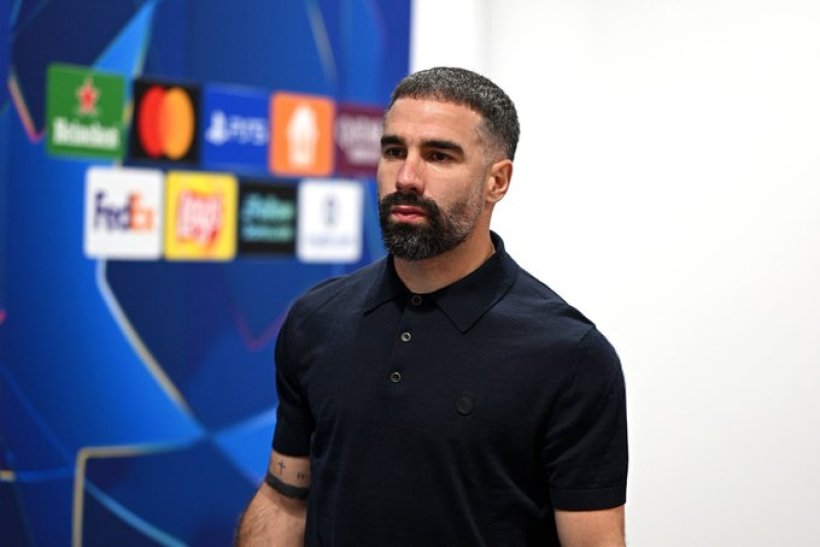
Dani Carvajal was the first to leave the Estádio da Luz after Real Madrid's harsh defeat to Benfica, heading towards the bus before any other player, with a face dominated by anger and frustration. Before that and during the match, he demonstrated his natural leadership role by following match results on his phone and conveying important information to the coaching staff about the team's position in the race for the quarter-finals. This was despite not having appeared regularly on the field for 127 days, since the Madrid Derby at the Metropolitano.
Carvajal returned from a serious knee injury, only to suffer a leg injury during the derby on September 27. He then returned in the Clasico where Real Madrid won 2-1 against Barcelona on October 26. A few days later, he underwent a minor arthroscopy on the old knee, beginning a challenging journey that continues to this day.
Although Carvajal was present in the recent match rosters, he only participated for limited minutes: 13 minutes against Albacete and 14 minutes against Monaco.
Coach Álvaro Arbeloa hopes for Carvajal's full return to readiness, as this has a direct impact on the team's balance. His presence will allow Fede Valverde to be relieved from heavy defensive duties and expand the playing options in midfield and attack.
With Carvajal's return, Arbeloa has two tactical options: either rely on a dominant midfield trio (Valverde, Tchouameni, Bellingham) to support the front lines in a 4-3-3 formation, or move Valverde back to the right side as Ancelotti did previously, making him a link between the midfield and attack, which helped the Italian win the last two Champions League titles.
The veteran Spanish star, who recently turned 34, still has to negotiate the renewal of his contract with the Royal Club, which expires in the summer. Given his significant status and extensive experience, it is strongly expected that he will continue with the team. However, his regular appearances on the field will be key to restoring Real Madrid's balance and giving them a strong boost towards positive results.
Carvajal returned from a serious knee injury, only to suffer a leg injury during the derby on September 27. He then returned in the Clasico where Real Madrid won 2-1 against Barcelona on October 26. A few days later, he underwent a minor arthroscopy on the old knee, beginning a challenging journey that continues to this day.
Although Carvajal was present in the recent match rosters, he only participated for limited minutes: 13 minutes against Albacete and 14 minutes against Monaco.
Coach Álvaro Arbeloa hopes for Carvajal's full return to readiness, as this has a direct impact on the team's balance. His presence will allow Fede Valverde to be relieved from heavy defensive duties and expand the playing options in midfield and attack.
With Carvajal's return, Arbeloa has two tactical options: either rely on a dominant midfield trio (Valverde, Tchouameni, Bellingham) to support the front lines in a 4-3-3 formation, or move Valverde back to the right side as Ancelotti did previously, making him a link between the midfield and attack, which helped the Italian win the last two Champions League titles.
The veteran Spanish star, who recently turned 34, still has to negotiate the renewal of his contract with the Royal Club, which expires in the summer. Given his significant status and extensive experience, it is strongly expected that he will continue with the team. However, his regular appearances on the field will be key to restoring Real Madrid's balance and giving them a strong boost towards positive results.
News Related
Real Madrid Congratulates Carlos Alcaraz on Winning the Australian Open
Real Madrid extends its congratulations to Carlos Alcaraz following his victory at the Australian Open.

Injury Strikes Bellingham
Real Madrid's midfielder, the Englishman Jude Bellingham, has sustained an injury

Real Madrid Targets Mac Allister for Signing
The name of Argentine midfielder Alexis Mac Allister resurfaces strongly

Real Madrid Plans Thoughtful Changes in Summer 2026
Real Madrid is strategizing for significant changes in the upcoming summer of 2026.

Vinicius Faces Rayo Vallecano Amid Suspension Threat
Vinicius is threatened with suspension due to yellow cards.

Real Madrid and Barcelona Compete for Racing Santander's Gem
Journalist Mario Cortegana revealed that Real Madrid has shown interest

Interest of Major European Clubs in Signing Upamecano Raises Concerns for Bayern Munich
Upamecano Attracts Interest from Major European Clubs Due to His Contract.

Laporta: Happy with the Court's Decision Against Real Madrid's Request, and the Results Prove We're on the Right Track
Joan Laporta, President of FC Barcelona, made decisive statements before attending
Mourinho: What Courtois Did Deserves the Fair Play Award
Mourinho praises Courtois' sportsmanship towards Trubin.

Real Madrid's Squad List for the Match Against Rayo Vallecano
Real Madrid coach Álvaro Arbeloa has revealed the team's squad list